Decision guide
Choose the right level of pricing control
| Situation | Practical approach | Control point |
|---|---|---|
| One property | Simple rules with weekly review. | Setup must not exceed the time saved. |
| Seasonal demand | Ranges and minimum stays by period. | Review transition weeks separately. |
| Orphan gap | Date-limited rule after operational check. | Do not discount the whole calendar. |
| Complex portfolio | Specialist revenue management. | Test data, roles, integrations and rollback. |
| Direct channel | Keep price and terms transparent. | Verify the page guests actually see. |
A dynamic rate is useful only when the decision behind it is clear
A flat year-round rate ignores the difference between a quiet weekday, a school holiday and a sold-out event weekend. Uncontrolled automation creates the opposite problem: it can overreact to weak comparables, discount below a viable level or change a night whose minimum-stay rule prevents anyone from booking it. A working strategy explains both when a rate moves and when it must stay inside a boundary.
Hosts searching for dynamic pricing for rentals usually want to save calendar time, protect high-demand dates and fill awkward gaps. Those outcomes compete. Maximum occupancy can reduce margin; an ambitious rate can remain empty; a broad discount can sell dates that did not need help. The process therefore needs costs, market context, booking-window logic and testing rather than a single optimization target.
This guide is for individual rentals and small portfolios. Larger operations with many unit types, owner targets, distribution contracts and revenue analysts may need specialist revenue-management software. Host Pilot can connect the offer to a direct booking website, digital guest guide and guest communication, but it does not promise a percentage increase or replace every enterprise pricing function.
Set a cost floor before using dynamic pricing for rentals
Separate costs per stay from costs per night. Include cleaning not passed through, laundry, consumables, channel and payment fees, coordination time, applicable taxes and a minimum contribution. A one-night booking can carry almost the same turnover cost as a longer stay, so rate and minimum stay belong in the same calculation. Record any strategic exception instead of silently weakening the floor.
Build a target range as well as a floor. A competitor’s visible high rate is not evidence that guests pay it. Compare capacity, micro-location, condition, amenities, cancellation terms, reviews and dates that are genuinely available. Review the set when the property or market changes. A defensible range prevents software from treating every nearby listing as interchangeable.
- Stay and nightly costs
- Floor and target range
- Minimum-stay rules
- Approval for exceptions
Read demand signals without chasing noise
Booking pace, lead time, day of week, comparable availability, length of stay and season provide more context together than an event label alone. Ask what triggered a recommendation. Verify events at an authoritative source and record the check date. A conference can change dates, and its audience may not match the property.
Keep the comparable set small enough to inspect. More data is not automatically more relevant. Remove properties with materially different location, quality or terms. The useful question is whether a signal supports a decision you can explain, monitor and reverse, not whether the dashboard appears sophisticated.
Split the calendar into booking-window horizons
The next seven days are mainly about operationally bookable gaps. The following six to eight weeks reveal booking pace. Farther-out seasons need protection against premature discounting and a check of events, maintenance and restrictions. Applying one percentage rule across all horizons ignores their different uncertainty.
Evaluate minimum stay with rate. An attractive price cannot convert if the guest’s dates are blocked by the rule, while an overly flexible stay can create expensive turnovers. Create time-limited rules for gaps, last minute, weekends and events. Make the active rule visible so an unexpected number is not “fixed” with another conflicting automation.
Handle orphan gaps and cancellations precisely
A vacant night between two reservations rarely justifies reducing the whole month. Confirm that cleaning and arrival make the stay possible. If so, limit the adjustment to that window and consider whether changing minimum stay solves the constraint more directly. Give the rule an expiry and keep the rest of the calendar protected.
After a cancellation, verify that dates reopened on every channel before changing price. Lead time and possible stay lengths are now different from the cancelled booking. Reassess rather than restoring the old rate automatically. Record the decision so future cancellations become comparable operating cases instead of repeated emergencies.
Test pricing changes without inventing attribution
Start with one property or period. Record the original rate, proposed change, reason, boundary and expected observation. Then inspect the actual booking channel. Test reservation changes, cancellations and blocked dates. A correct dashboard is not enough if a rate or restriction fails to publish.
Change one main variable at a time when practical. If photos, discount, rate and minimum stay all change together, a booking cannot be credited to one action. Decide the review date and rollback condition in advance. Measure booking pace, lead time, average stay, gaps and costs together over a meaningful period.
Choose software by controls, not promises
Ask vendors about data sources, refresh timing, floors, ceilings, events, stay restrictions, manual approval, history and rollback. Confirm what each integration actually sends. An iCal connection commonly handles availability; it should not be assumed to publish pricing rules. Test the complete route from recommendation to guest-visible total.
Include setup, supervision, training and recovery in total cost. A small host may benefit from a clear weekly review more than a complex engine. Larger portfolios need segmentation, alerts and roles. Choose the smallest system that reliably fixes today’s priority error and can show why a value changed.
Keep pricing aligned with the direct offer and stay
Before lowering a rate, check whether photos, description, cancellation terms and amenities make value clear. A direct booking page must show current availability and conditions. Unexplained price differences can weaken trust, while a clearly described direct benefit helps guests compare the real offer.
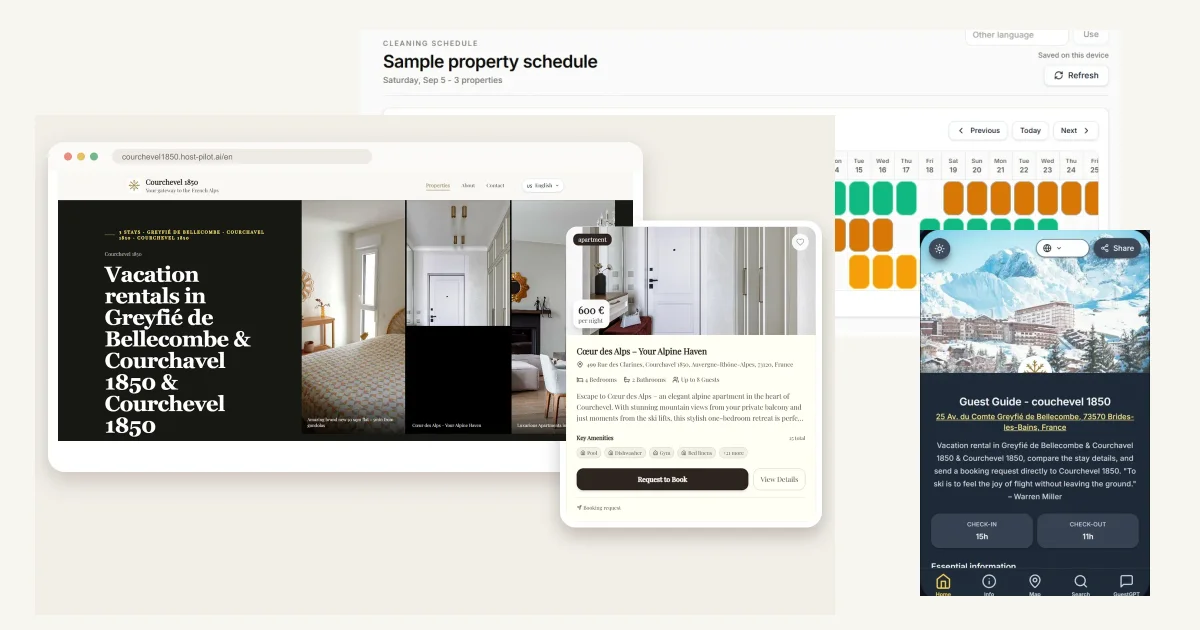
Host Pilot can turn a listing URL into two practical assets: a direct booking website and a digital guest guide opened by link or QR. Connected messages point guests to the same reviewed information, and GuestGPT can help retrieve it. This supports offer clarity and the stay experience; it does not determine the correct nightly rate or guarantee demand.
A weekly dynamic pricing operating review
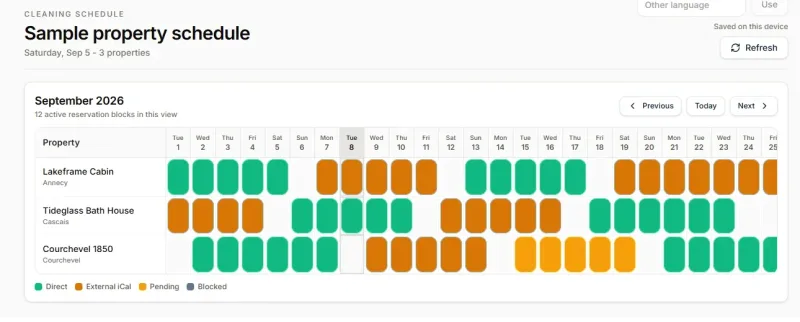
Start with availability rather than rate. Find newly opened cancellations, orphan gaps, blocked dates and minimum-stay conflicts. Divide the remaining calendar into near, medium and far-out horizons, then mark only dates that require a decision. This keeps a bright recommendation or percentage badge from distracting the host from a more basic problem: a night that cannot be booked or a channel that did not reopen.
For each marked period, review cost floor, current guest-visible total, booking pace, comparable supply and the reason for the last change. Choose hold, limited adjustment or observe. Write one sentence explaining the choice and set the next review date. Holding a rate can be an active decision. A stable process produces better learning than repeated changes made because an empty calendar feels uncomfortable.
Finish in the guest view. Search realistic dates, inspect rate, fees, cancellation and minimum stay, and open the direct page on mobile. Where channel totals differ, make the reason understandable instead of hiding it. Confirm that guest messages and the digital guide still describe the same property and current terms. Dynamic pricing for rentals succeeds only when the final offer is accurate, operationally deliverable and clear enough to book.
Keep a lightweight change log with date, old value, new value, rule, expectation and review outcome. Over time it reveals which gaps respond to a stay-rule change, which seasons book at a longer lead time and which market signals were noise. The log also prevents a new team member from repeating failed experiments. Data becomes useful when it preserves context and leads to a specific next decision.
Run a monthly strategy review separate from the weekly calendar check. Look for repeated patterns: weekdays that remain open, stay lengths that create costly turnovers, booking windows that consistently differ by season and rules that required manual correction. Update only a few assumptions at a time and preserve the prior value with its reason. This turns dynamic pricing for rentals into a learning system rather than a stream of unexplained rate changes. It also gives another team member enough context to cover the work without copying numbers blindly.
Audit rejected recommendations as well as accepted ones. If the host repeatedly overrides the same direction, investigate the cause: stale floor, broad comparable set, event noise or an incompatible minimum stay. Correct the input before adding another rule. Automation that is routinely ignored does not save time. The system should become easier to explain as evidence accumulates, and unnecessary rules should be removed at each seasonal review.
Realistic host scenario, not a guaranteed result
A cancellation opens four nights ten days before arrival
The host first confirms that all four nights reopened across channels and checks cleaning capacity. Friday remains protected, while two weekdays receive a modest, time-limited adjustment above the cost floor. The host records the reason and schedules a review in three days.
No booking arrives immediately, but the review reveals a conflicting minimum-stay rule. The host fixes that constraint before lowering price again. The scenario shows why dynamic pricing for rentals must combine availability, stay rules, operational capacity and rate rather than treating price as the only lever.
Practical workflow
Implement dynamic pricing for rentals in six controlled steps
- 1
Calculate boundaries
Separate stay and nightly costs, then define a floor and target range.
- 2
Segment the calendar
Use different questions for near, medium and far-out dates.
- 3
Write the rules
Document gaps, last minute, events, minimum stays and required approval.
- 4
Validate comparables
Check location, capacity, quality, terms and real availability.
- 5
Publish and verify
Inspect the guest-visible rate and restrictions on each intended channel.
- 6
Review with context
Track pace, lead time, stay length, gaps and costs before generalising.
Dynamic pricing for rentals FAQ
What is dynamic pricing for rentals?
It changes nightly rates using date, demand, lead time, availability and host rules. A sound process includes a floor, range, minimum stays, review and rollback.
How often should rental prices be reviewed?
A weekly review is a practical baseline for small hosts, with additional checks after cancellations or material events. Avoid constant changes without a hypothesis.
How do I set a minimum rental rate?
Add stay and nightly costs, fees, labour, applicable taxes and minimum contribution. Account for the higher turnover burden of short stays.
Should I discount an orphan gap?
First confirm it is operationally bookable. If it is, limit the rule to those dates and inspect minimum stay before lowering the broader calendar.
Does dynamic pricing guarantee more revenue?
No. Demand, competition, quality, rules and execution all affect results. Evaluate rate, occupancy, lead time, stay length and costs together.
How does Host Pilot relate to pricing?
Host Pilot connects a direct website, digital guide and communication so the offer stays clear. It complements pricing but does not replace specialist revenue management.
Useful next steps
Continue the pricing workflow
Start with one reviewed listing
A dynamic rate is useful only when the decision behind it is clear
Dynamic pricing for rentals changes nightly rates according to date, demand, booking lead time, available supply and the host’s own operating rules. It should not mean accepting every automated suggestion. Start with a cost-based floor, split the calendar into decision horizons, limit changes, verify channel publication and review results on a fixed cadence. Software can surface signals and apply rules, but it cannot guarantee occupancy or revenue.