1. Set guardrails first
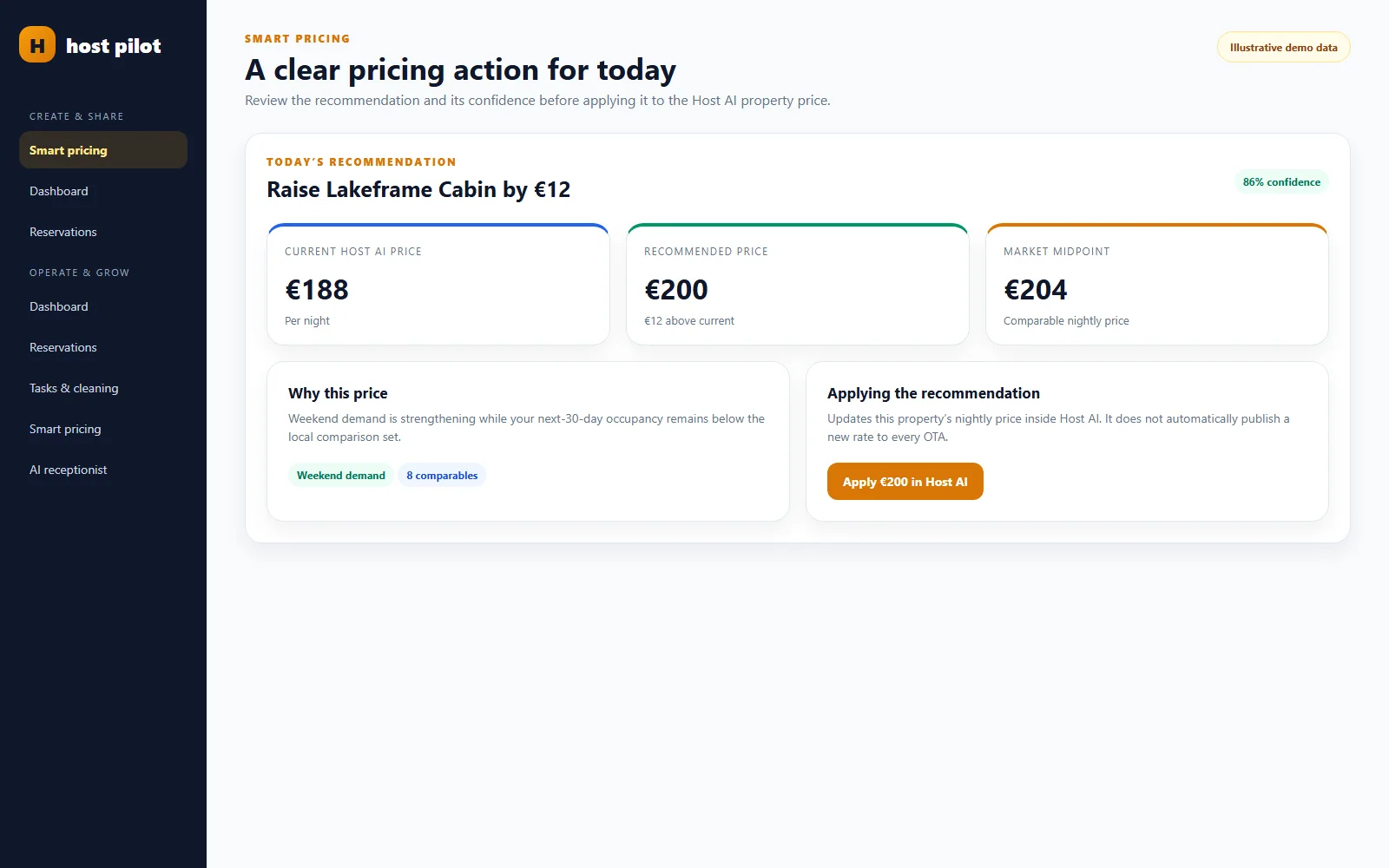
Define a minimum acceptable rate, a maximum sensible rate, cleaning and operational costs, and any dates where the property should not discount. Smart pricing software needs those boundaries to be useful.
Import once
Turn your Airbnb or Booking.com listing into a direct booking website and guest guide.
"I was charging $150/night when I could have been getting $220," admits Jennifer from San Diego. "The market data showed me I was leaving $50,000 on the table every year. Now I'm booking at premium rates and guests are happier because they're getting better value."
Join 8,000+ hosts who've discovered the 2025 pricing strategy that actually works.
Gothic Quarter Apartments
"During La Mercè festival, I was charging €80/night. Host Pilot's AI detected the demand spike and suggested €140. I was skeptical, but it worked! Booked out 3 months in advance."
Shibuya Business Suites
"Cherry blossom season used to be guesswork. Now I know exactly when to raise prices. Last year, I increased revenue by ¥2.8M just by optimizing for peak viewing times."
Notting Hill Luxury Rentals
"The AI caught something I missed - Wimbledon week demand patterns. I was underpricing by £120/night. Now I'm fully booked at premium rates during the tournament."
You're not looking for a "set it and forget it" solution. You want to understand your market, make informed decisions, and stay in control while the AI does the heavy lifting.
You want AI insights but need human oversight. You set the rules, we provide the intelligence.
You need to see the "why" behind every recommendation. Market signals, competitor analysis, demand patterns - all explained.
You're scaling fast and need pricing that grows with you. Clear guardrails, approval workflows, and audit trails.
While other pricing tools make you choose between control and intelligence, we give you both. Here's what makes the difference:
Set min/max rates, blackout dates, and seasonal rules. Our AI works within your boundaries so you don't leave money on the table or scare guests away. Learn about pricing best practices
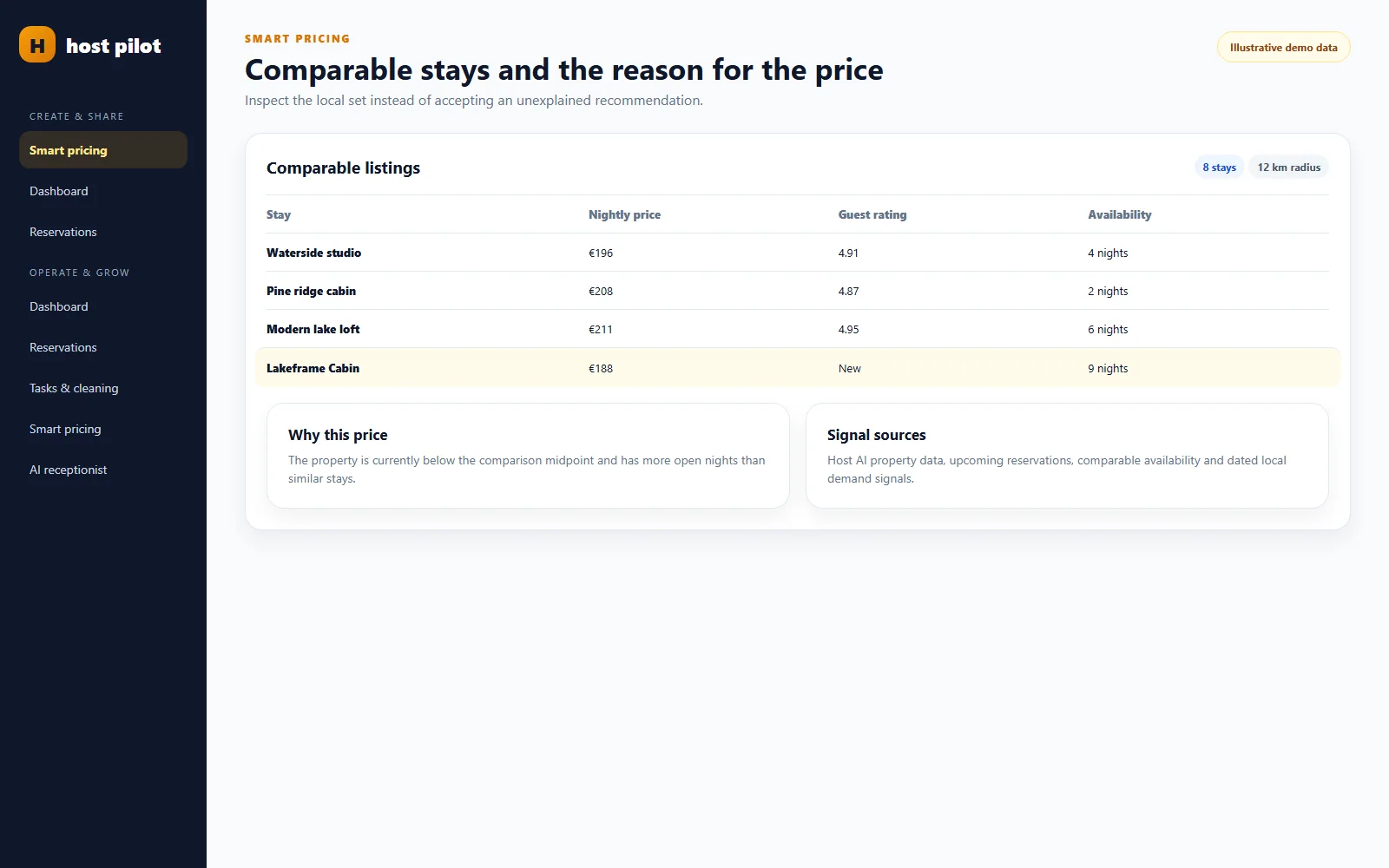
Competitor rates, local events, demand spikes, seasonality—all explained so you're not guessing and you can override when you know better. Airbnb's market insights guide
Review, approve, or modify every recommendation. Schedule changes in advance and track performance so you stay in control of your pricing strategy.

Our smart pricing software analyzes thousands of data points to recommend the optimal price for every night.
Continuously monitor competitor rates, local events, weather, and demand patterns to stay ahead of market changes.
Machine learning algorithms analyze historical data and market trends to suggest optimal pricing strategies.
Adjust prices to maximize occupancy and revenue, balancing demand with profitability. You stay in control with rules.
Set custom pricing rules for holidays, local events, and seasonal demand patterns to capture peak pricing.
Track competitor pricing strategies and automatically adjust your rates to maintain competitive advantage.
Detailed insights into pricing performance, revenue impact, and optimization opportunities with actionable recommendations.
Our smart pricing software makes revenue optimization simple and automated.
Link your Airbnb, VRBO, and direct booking channels to sync pricing data and enable controlled updates.
Configure pricing rules, minimum rates, and optimization preferences to match your business goals.
Monitor price adjustments and see revenue increase as occupancy and rates optimize.
Join thousands of hosts who've increased their revenue with intelligent pricing strategies.
Get clarity on controls, data signals, and strategy
Yes. Use rules and approval flows to keep control while leveraging AI insights and alerts.
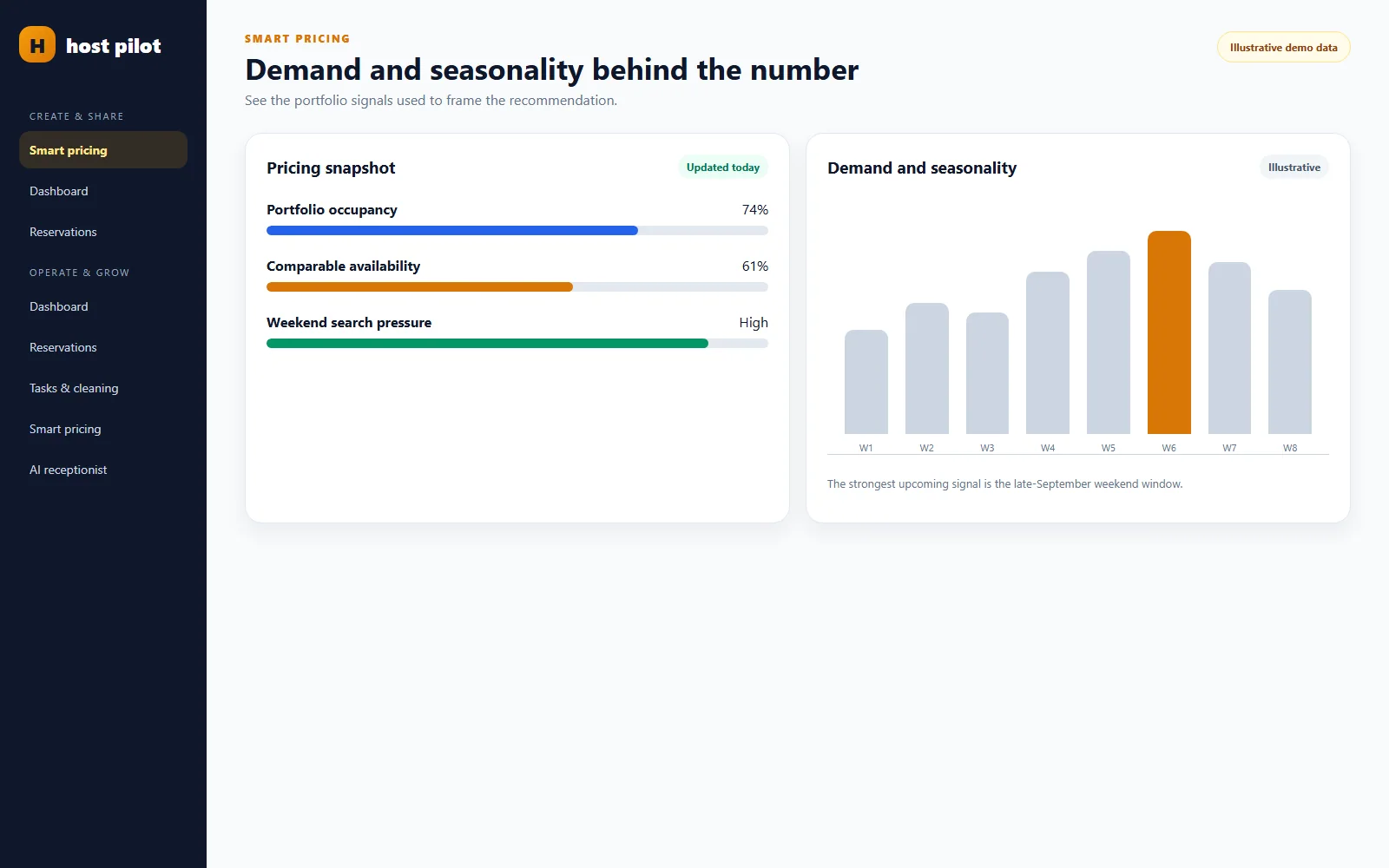
Demand curves, seasonality, comps, events, lead time, and occupancy trends.
Join thousands of hosts who've already increased their earnings with intelligent pricing strategies.
GSC performance refresh
Smart pricing software helps a host make repeatable rate decisions using demand signals, booking pace, availability, and the operating constraints of a real property. It is most useful when it supports a clear pricing policy: a host still sets minimums, maximums, stay rules, and the level of risk they are comfortable taking.
The first question is not whether smart pricing software can change a nightly rate. Most tools can. The more important question is what decision the price is meant to support: protecting a minimum revenue floor, filling short gaps, increasing lead time, or responding to an event period. Write that outcome down before changing rates.
Good rate management also depends on clean property information. A guest sees price, availability, rules, photos, and the promise made before booking as one experience. If a rate leads to more direct interest, the direct booking website and guest guide should explain the stay with the same level of clarity.
Define a minimum acceptable rate, a maximum sensible rate, cleaning and operational costs, and any dates where the property should not discount. Smart pricing software needs those boundaries to be useful.
Compare how far in advance different dates book. A short gap next week has a different decision from an unbooked weekend two months away.
A lower price may not help when minimum stays, blocked nights, or check-in rules make the date hard to book. Review the whole availability picture before reacting.
Record what changed and why. After several booking cycles, you can distinguish a useful adjustment from a change that simply made the calendar look busier.
Smart pricing software is a good fit when the host already knows their cost floor and wants consistent rate review without manually checking every date each day.
A pricing tool cannot repair unclear photos, weak arrival information, or an unclear offer. Improve the property page and direct booking experience alongside the pricing workflow.
Look at revenue, lead time, occupancy mix, cancellation pattern, and guest quality together. Occupancy alone is not a complete pricing outcome.


Smart pricing software can help a host review nightly rates against demand, booking pace, availability, and guardrails the host sets. It should support a pricing policy, not replace one.
Yes. Minimum and maximum prices give a pricing workflow commercial boundaries and help prevent recommendations from conflicting with costs, property positioning, or host priorities.
A weekly review is a sensible starting rhythm for a small host, with an additional check before high-demand periods or when availability changes materially.
Short answer
Host Pilot is built for hosts who need pricing pages that connect revenue decisions with guest experience, direct booking readiness, and simpler hosting operations without turning a small rental business into a heavy software project. Import one listing, then generate a direct booking website, a digital guest guide, and connected guest communication from the same source.
Search intent is usually practical: hosts want fewer repeated questions, clearer guest journeys, more direct booking control, and a setup that works before they hire an operations team.
Pricing intent is not only about rates. Hosts want to understand whether the tool helps them run a clearer, more profitable rental workflow.
Use this when pricing content should explain the operational context without making unsupported revenue promises.
Host Pilot is a better fit when you want a mobile-first guest experience layer, fast setup, direct booking pages, guest guides, and messaging in one simple workflow.
A heavier PMS can still be better if you manage a large portfolio, need complex accounting, or require enterprise owner reporting.
No. Host Pilot avoids unsupported guarantees and focuses on clearer guest experience, direct booking assets, and easier operations.
Hosts can keep pricing, direct booking pages, guest guides, and communication in a simpler operating flow.