Guest experience

Use an Airbnb Welcome Book Template Guests Can Use

Built for hosts with 1–10 properties

Most welcome book templates look good in a binder but fail on a phone. Guests need fast answers, not another file that gets lost in their inbox.

Start with the listing you already have

Turn your listing into a digital welcome book guests can actually use

Paste your Airbnb or Booking.com listing URL. Host Pilot imports the property details and opens the guided setup for a digital welcome book guests can actually use.

Next: create your account and start the 30-day free trial. A payment method is required before generation.

Listing URL → direct booking website → guest guide → guest communication

Direct answer

How to use an Airbnb welcome book template without sounding generic

An Airbnb welcome book template gives hosts a starting structure for the information a guest needs during a stay. Use it to organise a warm welcome, arrival help, Wi-Fi, home instructions, rules, local notes, and checkout. Then replace every vague placeholder with verified details from the actual property. A good Airbnb welcome book feels helpful because it is specific, not because it is long.

The most useful version is usually digital and mobile-friendly, with a QR or link guests can reopen. A printed copy can be a friendly backup in the home, but the host needs one maintainable source when something changes. Build the book around the guest journey and it becomes a practical stay companion rather than decorative paperwork.

Airbnb welcome book template with keys and local information in a vacation rental
A welcome book works when its practical information is easy to find, update, and use during a stay.
Host arranging an Airbnb welcome book and arrival essentials in a vacation rental entryway
Keep a welcome book focused on the things a guest needs after booking and during the stay.

Design information for the real stay

A useful guest resource is not a long welcome speech. It is a calm answer that a guest can find again when they are tired, outside the building, carrying luggage, or trying to use an unfamiliar appliance. Write for that moment. Put the practical action before the background story, use headings guests can scan on a phone, and test every detail against the real property instead of copying a generic template unchanged.

Keep a clear line between information a future guest needs to decide whether to book, information a booked guest needs during the stay, and internal notes a host team uses to run the property. A direct booking website can explain the stay, an Airbnb guest guide can explain how to enjoy it, and an operational workflow can hold private coordination. That separation keeps updates safer and makes each asset easier to use.

Understand what an Airbnb welcome book is for

A welcome book is not the same as a listing description. A listing helps someone decide whether the stay is a fit. An Airbnb welcome book helps a person who has already booked find their way around the home. That means practical information takes priority: access, Wi-Fi, heating, waste, quiet hours, local basics, help, and checkout.

The welcome can still have personality. A short note about what makes the home comfortable or how to enjoy the neighbourhood can make the stay feel cared for. But do not hide important instructions inside that note. Guests should be able to jump straight to the action they need, then explore the warmer details when they have time.

Build the template around eight useful sections

A strong Airbnb welcome book template has a welcome, arrival and access, Wi-Fi, home essentials, appliances, house rules, local recommendations, help, and checkout. You may combine a few sections for a small studio, but do not remove information simply because it feels obvious to the host. A guest arriving for the first time sees the home differently.

Use headings guests would search for. “Wi-Fi and workspace” is clearer than “stay connected.” “Where to put the rubbish” is clearer than “home care.” Clear wording is not less welcoming; it is a sign that the host respects the guest’s time. The best template helps you notice what needs a decision before you publish.

Write an arrival and access section that works at night

Arrival is where an Airbnb welcome book earns its place. Explain the real route from the final landmark or street to the property, then give access steps in order. If a guest must use a gate, lift, key safe, or separate entrance, include only the information that is safe to share in the booked-guest context. A photo should show a genuine landmark or decision point, not a decorative room image.

Give guests a short plan B if something does not work. Explain the first thing to check, the information they should send when asking for help, and who responds outside normal hours. This does not mean anticipating every possible failure. It means giving a guest a calm, respectful path instead of leaving them uncertain at the doorway.

Turn home information into simple instructions

For each appliance or home feature, write the shortest true instruction. Guests may need to know where the heating control is, how to use the coffee machine, where to find extra bedding, or how to reset a Wi-Fi router. A single verified step is usually more helpful than a full manual copied from the manufacturer.

Avoid claiming amenities you have not checked recently. If the workspace is a small table, say that. If a parking space is subject to local rules, explain the practical limit. Honest details set better expectations and reduce the kind of disappointed message that a welcoming tone cannot solve later.

Include rules as hospitality, not a warning list

House rules help guests understand how to care for a shared building, neighbours, and the home. Keep them short, specific, and connected to a real reason where useful. Quiet hours, smoking, visitors, pets, waste, and shared amenities are common topics. Write them as clear expectations, not as a long legal document pasted into the welcome book.

Place rules where guests are likely to need them. A check-in message can point to the full guide, while a small physical reminder can support a practical rule in the home. Consistent information across the booking flow matters more than repeating every rule in multiple formats.
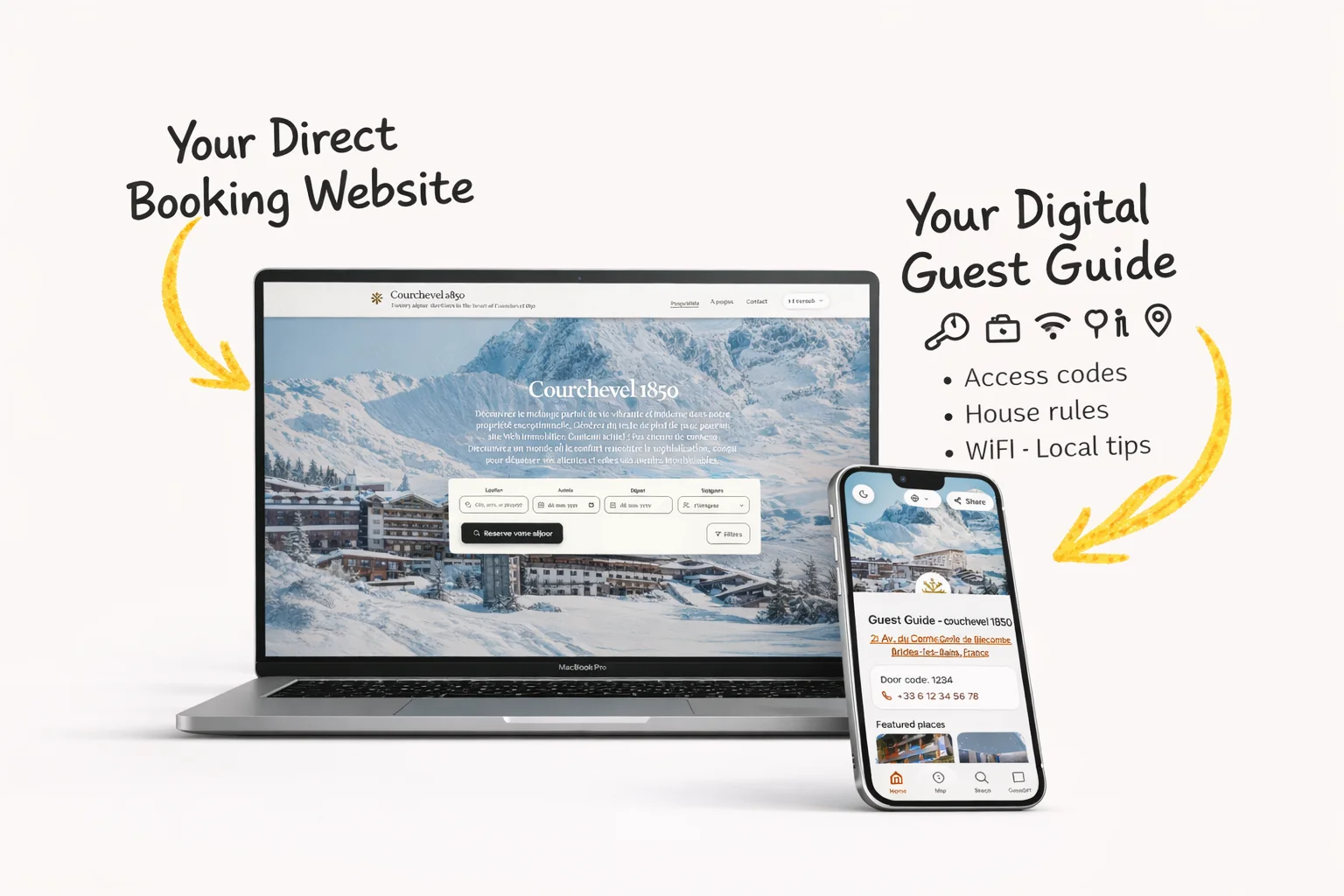

Choose local tips that help this guest today

A welcome book can make a neighbourhood feel approachable when it includes a few thoughtful, current recommendations. Consider the first meal after arrival, the nearest food shop, public transport, a quiet walk, a family option, or a rainy-day activity. Explain why a place is useful rather than simply listing names.

Keep recommendations modest and reviewed. Local businesses change and guests can tell when a guide has been copied from a generic travel list. A host does not need to become a tourism publisher. A handful of practical, honest tips is enough to make a real difference during a stay.

Keep one source of truth and update it after use

A digital Airbnb welcome book gives a host one source to maintain. Use a printed version as a backup if it helps the property, but direct guests to the mobile version for information that changes. Place a QR code somewhere natural, test it on a different phone, and make sure the guide is still clear without an app download.

After checkout, record the questions guests asked and the points that cleaners or co-hosts had to clarify. Improve one weak section at a time. A welcome book that is reviewed after real stays becomes more trustworthy every month, while a beautiful one that is never updated becomes another source of confusion.

Realistic host scenario

Example: a template becomes a property-specific welcome book

This is a realistic host scenario. A host starts with a generic Airbnb welcome book template and notices it says only “parking nearby” and “please respect the apartment.” They replace those placeholders with the correct entrance, how the parking arrangement works, quiet hours, waste location, Wi-Fi, and a short note about the coffee machine. They remove travel tips that do not fit the neighbourhood.

The result is not a glossy brochure. It is a small guide the guest can actually use. The host sends the link before arrival, keeps a QR card in the apartment, and updates one section when guests mention that the entrance is hard to see after dark. The book becomes more useful because it reflects the real stay.

Airbnb welcome book template checklist

  • Every placeholder replaced with a property-specific fact.
  • Arrival, access, Wi-Fi, rules, help, and checkout verified.
  • Private access details shared only in the booked-guest context.
  • Appliance and amenity instructions are short and true.
  • Local recommendations are current and explain why they help.
  • Digital version tested on mobile, with an optional QR backup.

What a useful guest resource changes

A strong Airbnb welcome book template gives the guest a dependable place to return to, instead of forcing them to search old messages. For the host, it makes the property’s reliable information easier to keep current and share consistently. That is a better result than simply adding more automation or more pages.

Review it when the property changes, when guests consistently ask a question, and before a busy season. The host experience and guest experience improve together when the information is accurate, appropriately timed, and written for a real person rather than a search engine alone.

Common mistakes to avoid

Leaving template placeholders in place

A vague line about parking or access creates work for the guest and the host. Replace every placeholder with an accurate answer.

Making the book a copy of the listing

Use the book for the stay experience, not for public booking copy or internal staff notes.

Adding too many recommendations

Choose a small number of useful places and keep them current rather than building an unreviewed directory.

Forgetting a mobile version

Guests need to reopen information outside the property as well as inside it.

Use one property record to create helpful guest assets

Host Pilot can turn reviewed listing information into a direct booking website, an Airbnb welcome book or guest guide, and connected communication. The value is practical reuse: less duplicated setup for the host and less searching for the guest, with human review still at the centre.

Simple solution

Start with a free Airbnb welcome book template, then publish it as a digital guest guide guests can actually use on mobile.

Start free trial

2 min - see exactly how it works

Why hosts use this

Hosts usually look for airbnb welcome book template when they want a simpler way to handle guest communication, arrivals, bookings, or day-to-day operations without adding extra admin.

Replace static PDFs with something usable

Share a welcome book format guests can open quickly instead of burying key details in attachments.

Reuse the same structure across properties

Keep a repeatable welcome book format for WiFi, rules, parking, and local info.

Support check-in and stay questions together

A strong welcome book helps before arrival and during the stay, not just at one point in the journey.

Example welcome book structure

Optional example

A practical welcome book template usually includes welcome note, access instructions, WiFi, rules, appliance basics, and local recommendations.

Quick FAQ

Quick answers for hosts comparing options and trying to fix guest communication, arrival, and operations pain points.

What is this?

This is a welcome book template approach for Airbnb hosts who want one clear format for stay information guests can actually use.

How does it work?

You start with a simple structure, add your property details, and share the result as a guest-friendly mobile page instead of a static file.

Can I use it with Airbnb/Booking?

Yes. The same welcome book can support Airbnb and Booking.com guests when you want a single information source across channels.

What should an Airbnb welcome book include?

Include a welcome, arrival and access help, Wi-Fi, home and appliance notes, house rules, local recommendations, help, and checkout. Replace each template placeholder with a verified property detail.

Is a digital Airbnb welcome book better than a printed one?

A digital book is easier to update and can be reopened before and during the stay. A printed copy or QR card can be a useful backup inside the property.

How long should an Airbnb welcome book be?

Make it as long as needed to answer real guest questions, but keep each section short and scannable. Useful property-specific information matters more than page count.

Can I use an Airbnb welcome book template for several properties?

Use one structure across properties, then customise every access detail, rule, amenity, and local recommendation. Do not assume one property’s instructions apply to another.

What is the difference between an Airbnb welcome book and guest guide?

The terms often overlap. Both should help booked guests during a stay. A digital guest guide is usually the mobile, link-based version that can be shared before arrival and updated centrally.

Related pages

Browse nearby host workflows from the hub so you can compare practical next steps without starting over.

Start free trial

Use Host Pilot to connect guest communication, guest guides, direct bookings, and operations in one workflow built for smaller host teams.