1. Make the offer specific
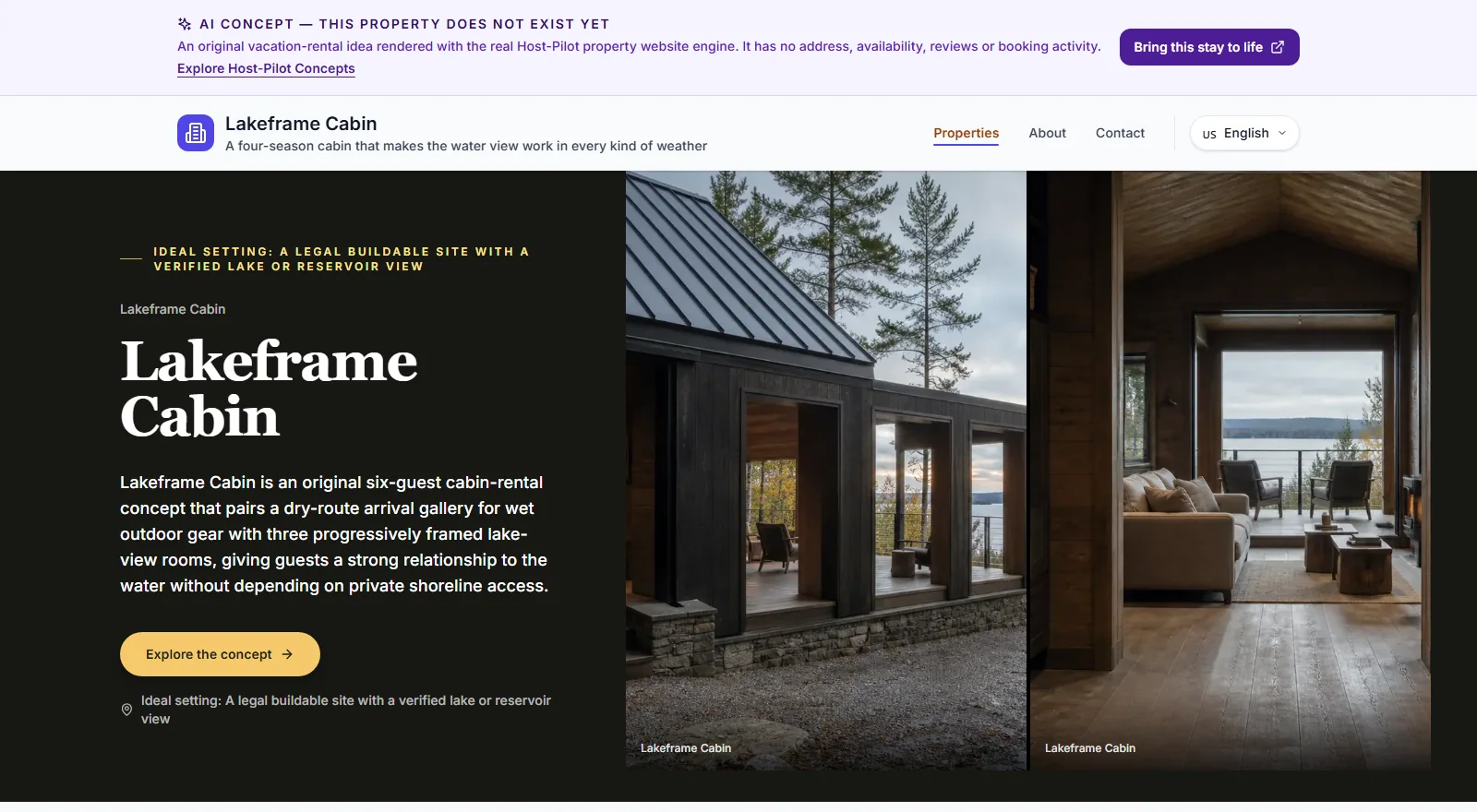
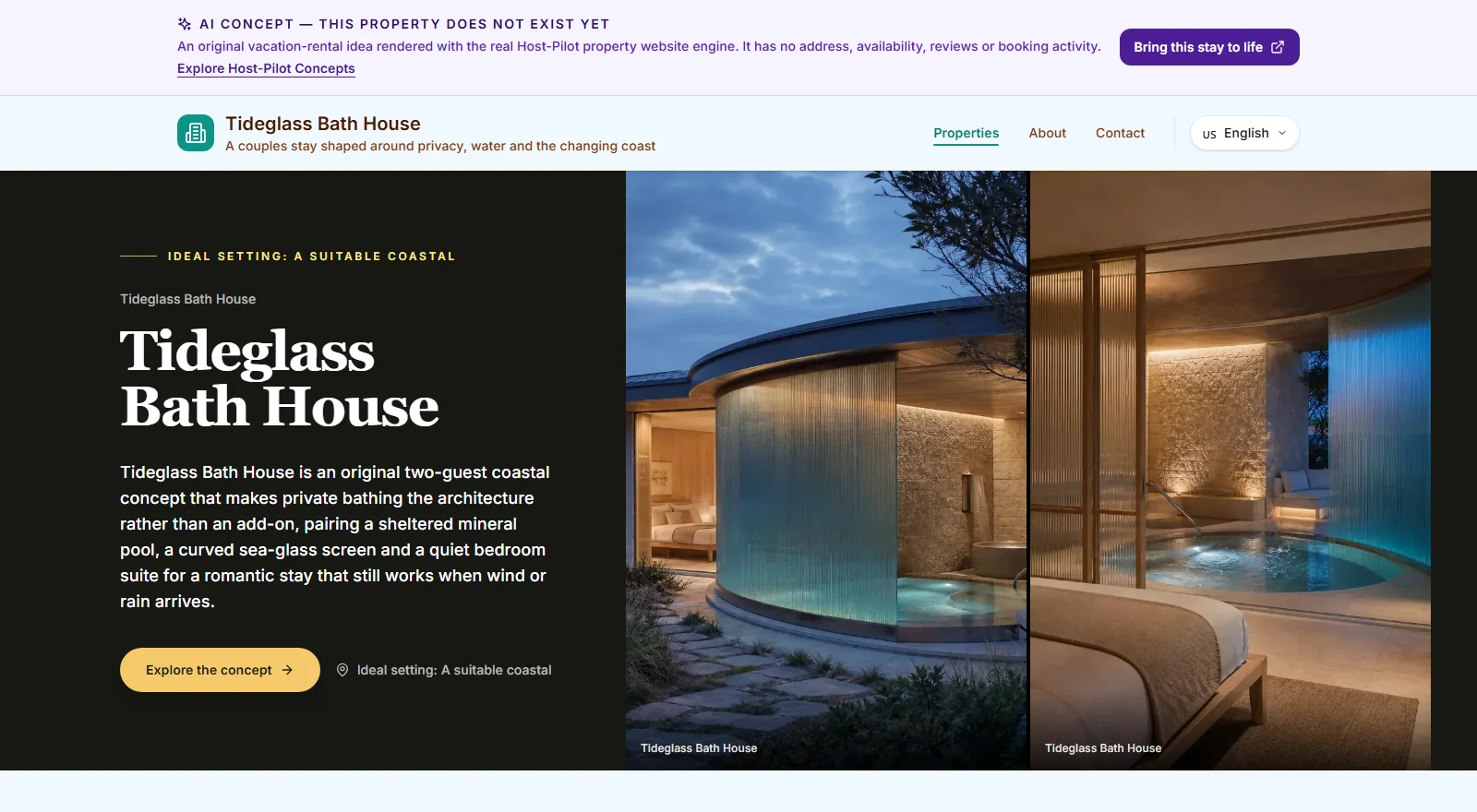
Lead with the property, location context, guest fit, capacity, and the reason a visitor should keep reading. Avoid a generic promise that could describe any rental.
Turn your Airbnb or Booking.com listing into a booking-ready website with your branding, your policies, and a clear path for repeat or referral guests to book direct.
Paste your listing URL once and start with airbnb guest experience automation so one import can publish the direct booking website, generate your digital guest guide, and prepare the guest messaging flow without rebuilding each section by hand.
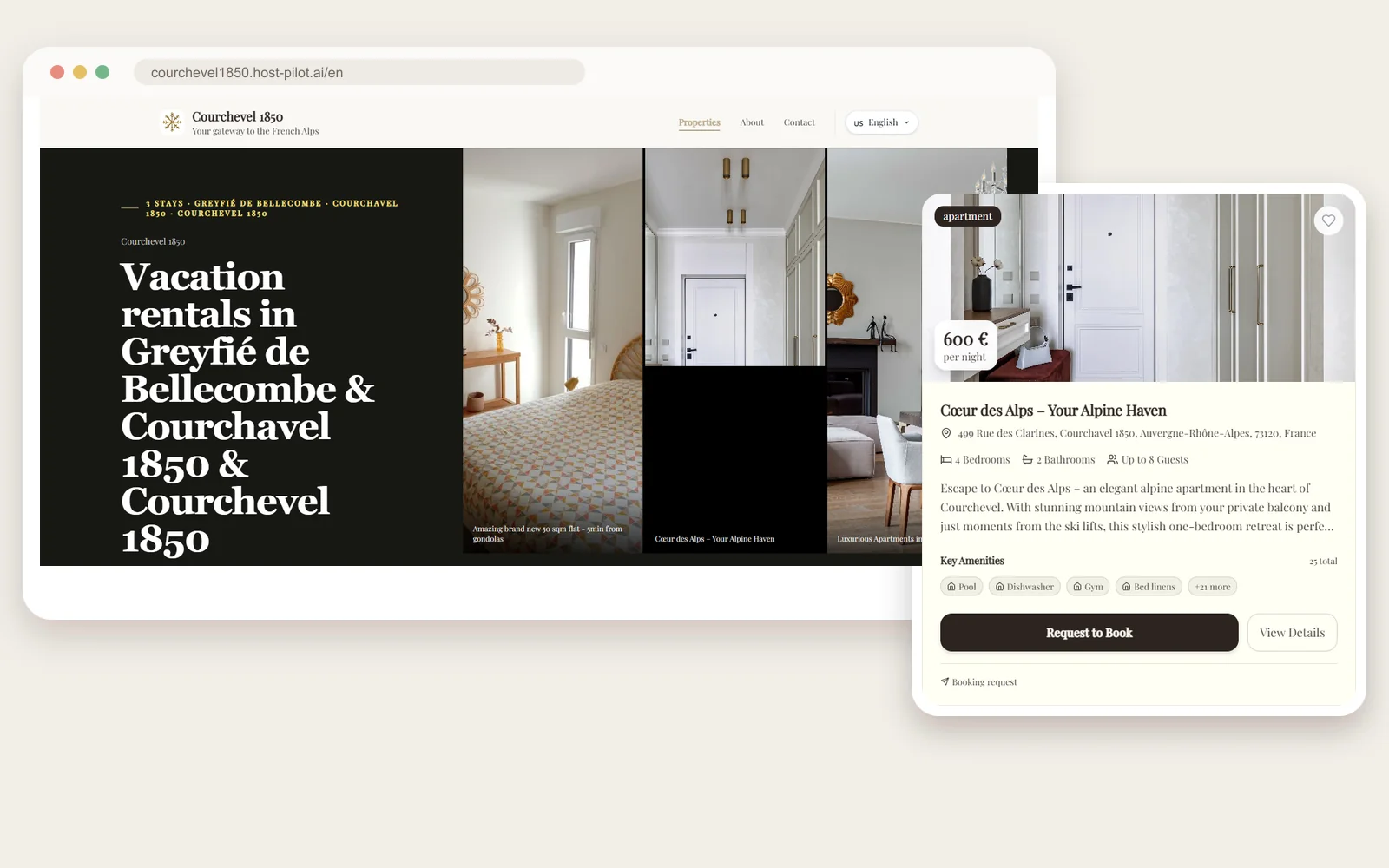
Marais District Studios
"Platform fees were eating €2,400 monthly. My direct booking site now generates 60% of reservations. Guests prefer the personal touch, and I save €28,800 yearly. See how Maison Bleue in Paris showcases luxury properties with our platform."
Kreuzberg Creative Lofts
"My direct booking site has a 40% higher conversion rate than platforms. Guests love the instant confirmation and local recommendations. Revenue up 55% in 6 months."
Roma Norte Boutique Suites
"Platform dependency was risky. Now I own my guest relationships. My direct site books 70% of stays, and I can offer personalized packages that platforms don't allow."
Paste your Airbnb or Booking.com listing URL. Host Pilot imports the property details and opens the guided setup for a branded direct booking website.
Next: create your account and start the 30-day free trial. A payment method is required before generation.

The vacation rental industry is shifting. Smart hosts are building their own empires while others keep paying the platform tax.
of successful hosts have direct booking websites
See examples like Maison Bleue Paris showcasing luxury direct booking experiences.
Industry report 2025"I was skeptical about building my own website. I thought it would be complicated and expensive. But after seeing my neighbor save $4,000 in one month by going direct, I had to try it. Now I have 60% of my bookings coming through my own site, and my guests actually prefer it because they get better rates and more personalized service."
Hosts who want to reduce OTA fees and build a brand that compounds via SEO.
Lean markup, schema, and performance built in so your properties appear in search results instead of getting buried.
Trust badges, urgency cues, and social proof so guests feel safe booking direct instead of leaving for a platform.
Point your domain and SSL is handled—guests see yourbrand.com with a secure padlock, not a generic subdomain.

Trusted by property hosts worldwide
Stop losing 15–20% to platform fees. Your site takes direct bookings, shows real-time availability, and works with smart pricing and a smart inbox so you keep more revenue and answer guests in one place.
Your own domain (e.g. yourproperty.com) so guests remember you and come back—and so you look professional, not like a third-party listing.
Built-in SEO and structured data so your vacation rental website can show up in search—reducing dependence on platform traffic. Works with our vacation rental management software.
Your site works on desktop, tablet, and mobile so guests don't bounce when they're booking on the go—most book on mobile, so this keeps conversions high.
Real-time availability and instant confirmations so guests book and pay on your site—and you never overbook or chase payment links.
Track visits, behavior, and conversions so you know where guests drop off and what to improve. Works with property management analytics.
Professional themes plus your branding and copy so your site reflects your style—and you're not competing with other listings on a platform.
Clear answers for hosts building a direct booking website from their listing
A direct booking website is your own booking site for repeat, referral, or organic guests so you can take reservations outside Airbnb or Booking.com.
Yes. Host Pilot can turn your Airbnb or Booking.com listing into a booking-ready website so you do not have to rebuild every property detail manually.
Most hosts can publish the basics quickly once the listing details are imported, then refine branding, policies, and content over time.
No. Host Pilot is designed as a simpler guest experience system for small hosts who want a direct booking website, digital guest guide, and guest communication flow without a heavy PMS setup.
Yes. Many hosts keep Airbnb and Booking.com for discovery while using a direct booking website for repeat guests and referrals.
Get your site live in minutes so you can stop sending platform fees and start keeping 100% of direct bookings.
Pick a professional theme so your site looks trustworthy and converts—no design skills needed.
Add your photos and copy so guests see your property and your brand—not a generic template.
Connect your domain and go live—guests can book and pay on your site so you keep 100% and avoid platform fees.
Join thousands of successful hosts who've built their own booking websites and transformed their business with direct bookings.
Keep the fees you used to pay to Airbnb or Booking.com—direct bookings mean more profit and full control over your pricing.
You keep guest data and can reach them again—so repeat bookings and email campaigns don't depend on a third party.
Your look, your copy, your rules. No competing with dozens of other listings on the same platform page.
Your site can rank in search so guests discover you organically—less reliance on platform traffic or paid ads.
A professional, trustworthy site with clear CTAs so guests complete the booking instead of leaving for a platform.
Your site is yours—it compounds in value as you add content and traffic, instead of paying platform fees forever.
Join thousands of successful hosts who've already built their own booking websites and captured direct bookings with Host Pilot.
Payment method required • 30-day free trial • Cancel anytime
GSC performance refresh
A direct booking website gives a vacation-rental host a clear place to send repeat guests, referrals, and people who find the property outside an OTA. A useful direct booking website is not just a copy of a listing. It explains the stay, makes availability and booking steps clear, and connects guests to the information they need after booking.
A direct booking website earns trust when a guest can answer the practical questions without searching for them: What is the property? Who is it for? Where is it? What does booking look like? What happens after confirmation? Clear photos and honest rules matter more than decorative marketing language.
The site should be part of a complete guest journey. The information that wins the booking belongs on the website; time-sensitive arrival instructions belong in the message sequence; durable stay details belong in a mobile guest guide. That division prevents a direct booking website from becoming an isolated landing page.
Lead with the property, location context, guest fit, capacity, and the reason a visitor should keep reading. Avoid a generic promise that could describe any rental.
Show how availability, payment, cancellation terms, and contact work. A visitor should not have to open a message thread just to understand the next step.
Use current photos, accurate amenities, house rules, and clear arrival expectations. Direct booking visitors are looking for evidence that the host has thought through the stay.
After confirmation, share the guest guide and the right messages at the right time. The website begins the relationship; it does not need to carry every stay detail.
A direct booking website is valuable when you have repeat guests, referrals, social or local demand, or a clear property identity that deserves a reliable home beyond a marketplace listing.
A website does not create demand by itself. It gives existing demand a credible place to land and makes it easier for a guest to understand a direct option.
Start with accurate listing content, then generate or build the site, a guest guide, and a connected message flow from the same verified source.


A direct booking website is a property website where guests can understand the stay and take a direct booking path rather than relying only on an OTA listing.
Include accurate property details, photos, guest fit, booking steps, policies, contact information, and a clear next action. Keep post-booking operational details in a guest guide and message flow.
Yes. Host Pilot is designed to use one listing as the starting point for a direct booking website, a digital guest guide, and connected guest communication, without requiring a full migration.
Short answer
Host Pilot is built for hosts who need a direct booking website, a vacation rental website builder, and guest-ready content generated from one listing without turning a small rental business into a heavy software project. Import one listing, then generate a direct booking website, a digital guest guide, and connected guest communication from the same source.
Search intent is usually practical: hosts want fewer repeated questions, clearer guest journeys, more direct booking control, and a setup that works before they hire an operations team.
Direct booking website pages should explain how hosts capture repeat guests, reduce platform dependency, and still keep the guest journey clear before arrival.
Use this when the main goal is a bookable website plus guest guide, not a complex enterprise booking engine.
Host Pilot is a better fit when you want a mobile-first guest experience layer, fast setup, direct booking pages, guest guides, and messaging in one simple workflow.
A heavier PMS can still be better if you manage a large portfolio, need complex accounting, or require enterprise owner reporting.
Yes. Host Pilot can use listing content to create a direct booking website and connect it with the guest guide and messaging flow.
No. The product is built for smaller hosts who want a professional direct channel without heavy setup.