Airbnb hosts
Learn a direct booking Airbnb workflow you can use with guests who already trust your property.
Import once
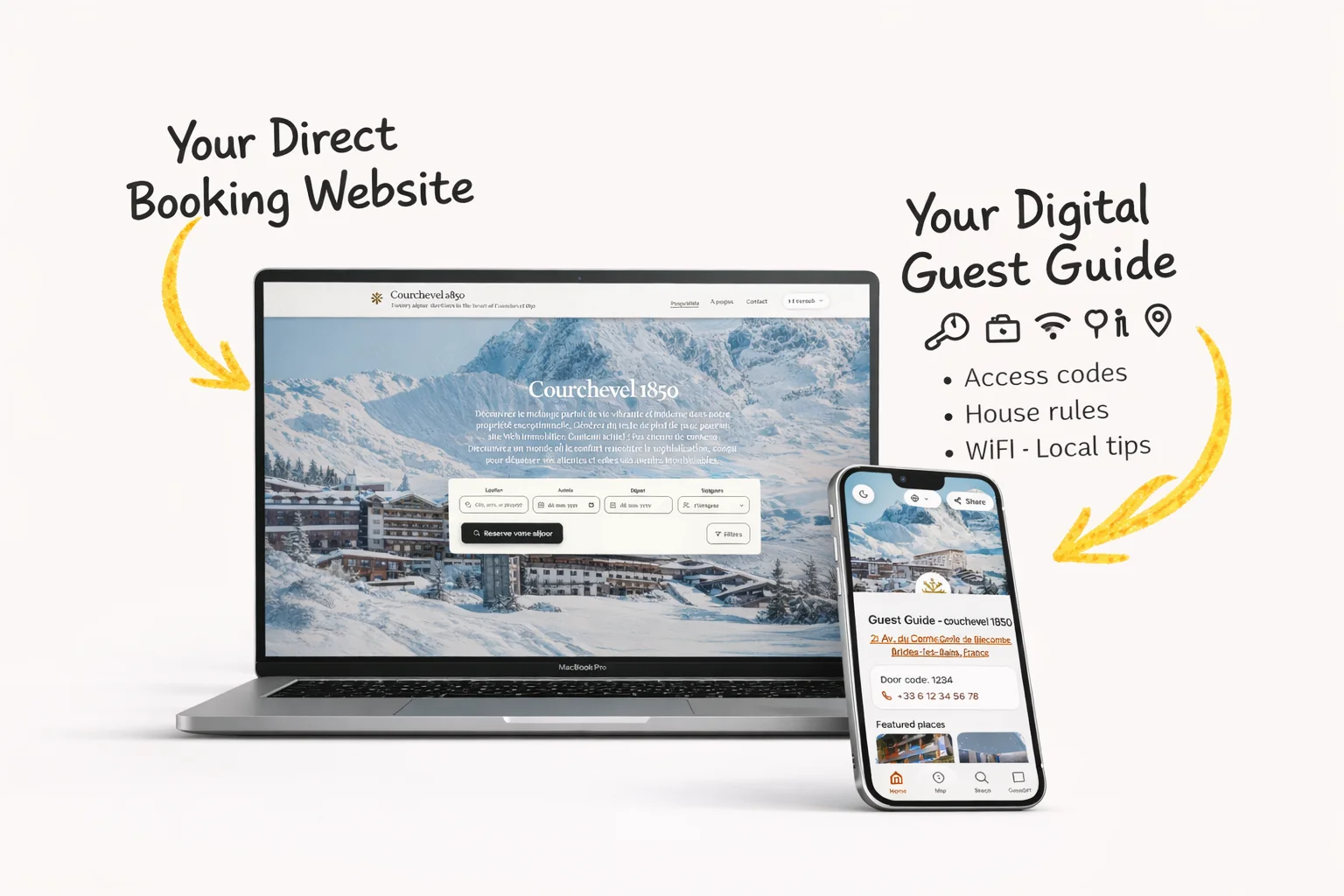
Turn your Airbnb or Booking.com listing into a direct booking website and guest guide.
Step-by-step course for hosts
This Airbnb direct booking course teaches hosts how to turn one Airbnb or Booking.com listing URL into a direct booking website, an Airbnb guest guide, guest communication links, and repeat bookings.
Learn a direct booking Airbnb workflow you can use with guests who already trust your property.
Use the same listing URL approach to create direct booking assets for repeat and referral guests.
Build repeat bookings without needing a heavy channel manager or full PMS migration first.
Give team members simple guest guide and website links to use in guest communication.
Course curriculum
The course focuses on a practical system: create the two assets, share the right link at the right time, and turn happy guests into a returning customer list.
Prepare one Airbnb or Booking.com listing URL before generating anything.
Create a direct booking website guests can use to book with you again.
Create an Airbnb guest guide for check-in, Wi-Fi, house rules, and local tips.
Share links in Airbnb messages, Booking.com messages, WhatsApp, email, groups, and follow-ups.
Build a repeat guest list that supports more direct bookings over time.
The direct booking system
The system is simple enough for one property, but strong enough to repeat across a small portfolio: listing URL, website, guide, guest messages, repeat guests.
Listing URL
01
Website
02
Guest guide
03
Guest messages
04
Repeat guests
05
Inside the course
Use the bonus lessons to share beyond past guests, improve reviews, reduce questions, and copy message scripts into your real guest communication.
Share Beyond Past Guests
Improve Reviews and Reduce Questions
Templates and Message Scripts
Build an owned path without rushing the fundamentals
An Airbnb direct booking course should teach a host how to turn a proven listing into an owned direct booking website, a useful guest guide, and a respectful repeat-guest follow-up workflow, one practical step at a time.
The first lesson in an Airbnb direct booking course is not “launch a website.” It is to make your current listing accurate enough to reuse. Check sleeping arrangements, amenities, location wording, photographs, arrival information, minimum stays, and property rules. A direct booking website cannot create trust if it repeats an outdated claim. Start with the details a guest would notice immediately and keep a short list of facts that need a human check before anything is published.
This approach also keeps the course practical. Instead of writing every section from a blank page, you begin with a listing that has already been tested by real guest questions. Host Pilot can turn an Airbnb or Booking.com listing URL into a first direct booking website and digital guest guide. Treat that result as a draft to review, not a substitute for verifying safety, access, pricing, or policy information.
An Airbnb direct booking website and a guest guide are related but they do not have the same job. The website is for a potential or returning guest deciding whether the property suits them. It should make the stay easy to understand, show the important property details, and give a clear next step. The guide is for a booked guest who needs practical help during the stay. It should make arrival, Wi-Fi, appliances, house rules, and local tips easy to find.
Separating those jobs improves both assets. Do not overload a booking page with door-code detail. Do not make a current guest search a marketing page for rubbish instructions. In a good Airbnb direct booking course, you learn to connect the assets through the guest journey while keeping their content purpose-specific. That makes every message shorter, every handoff clearer, and every future update easier to maintain.
A direct booking strategy should be built for legitimate repeat relationships, referrals, and your own audience. It should never encourage a host to bypass platform policies or pressure a guest to leave a channel in a way that violates their booking agreement. Use your website and guide where you are allowed to share them, and make sure every link adds genuine value for the guest. A pre-arrival guide link is useful because it helps the stay go well; a follow-up link can be useful because a happy guest may want to return later.
The course workflow is deliberately modest: share helpful information at the right time, let the quality of the stay earn trust, and give guests a clear place to find you again. No landing page guarantees bookings. Consistent property information, responsive support, fair policies, and a good stay are still the foundation. The direct booking website is the owned destination that makes those efforts easier to discover later.
Measure the small signals first. How many guests open the guide? Which questions still arrive after the pre-arrival message? Do past guests or referrals visit the direct booking website? What sections cause confusion? These are practical course metrics because they show where the guest journey breaks. Do not judge the entire Airbnb direct booking course by one booking in the first week.
Use each stay as feedback. If guests ask about parking, improve the guide and website where relevant. If they ask whether the property is suitable for remote work, make the workspace details clearer. If repeat guests contact you through an old channel, give them a simple, current website link after the original stay. The system becomes more valuable through accurate revisions, not through publishing more pages for their own sake.
A direct booking website needs the same care you would give a public listing. Use current photos, explain the property in plain language, identify the main amenities, and make policies easy to understand. Include a clear way for a guest to ask a question before booking. If a detail is uncertain, verify it before publishing rather than adding a persuasive sentence that could later disappoint a guest. Trust grows when the direct booking website feels consistent with the stay people remember.
This Airbnb direct booking course also encourages hosts to review the page after every meaningful property change. A new access method, revised house rule, or closed local amenity can affect a guest decision. Make updates at the source, then check the website and guide together. That maintenance rhythm is more valuable than a one-time launch because it keeps the owned channel honest, useful, and aligned with the service you can deliver.
At the end of the first month, choose one improvement based on real guest behaviour. It might be a clearer workspace description, a better parking diagram, a more useful local recommendation, or a simpler pre-arrival note. Update the original listing information and confirm the direct booking website and guide still match. This is how an Airbnb direct booking course becomes an operating habit rather than a collection of lessons.
Keep your expectations realistic. Direct bookings grow through earned trust, helpful service, accurate content, repeat visibility, and guest referrals over time. The course gives you an owned foundation to improve. It does not replace demand, competitive pricing, compliance, or the ongoing work of delivering a stay that guests want to recommend.
You will learn a practical workflow for turning an Airbnb or Booking.com listing into a direct booking website, a digital guest guide, useful guest messages, and a repeat-guest follow-up system.
Yes. The workflow starts with the property information you already maintain and applies to both Airbnb and Booking.com hosts who want an owned direct booking destination.
No. A course can help you build and improve the assets that support direct bookings, but booking results depend on the property, pricing, demand, guest trust, policies, and the quality of the stay.
Example assets
These examples show the two assets you will learn to create and share: a direct booking website and an Airbnb guest guide.
Quick answers
An Airbnb direct booking course teaches hosts how to create a direct booking website, Airbnb guest guide, guest communication links, and repeat guest follow-up system from one Airbnb or Booking.com listing URL.
This course is for Airbnb hosts, Booking.com hosts, vacation rental owners, and small short-term rental managers who want more repeat bookings and less dependence on OTAs.
Airbnb hosts get more direct bookings by creating a direct booking website, sharing a helpful Airbnb guest guide in guest messages, and following up with happy guests after checkout so they can book directly next time.
No. The course starts with your existing listing URL so you can turn real property information into a direct booking website and guest guide without rebuilding everything from scratch.
Yes. Booking.com hosts can use the same system: start with a listing URL, create direct booking assets, share links in guest messages, and build a returning guest list.
Start building
Learn the workflow, build the assets, and start sharing the right links with guests so your direct booking Airbnb channel grows step by step.