One apartment
Model a normal month first. If the target rate is far above comparable total prices, reduce costs, change the target or revisit the stay-length strategy before chasing occupancy.
Import once
Turn your Airbnb or Booking.com listing into a direct booking website and guest guide.
Free planning worksheet
Work backwards from the payout your property needs, see how fees change the result, and set rate guardrails before you touch the live calendar.
Short answer
This calculator estimates revenue and payout from your own assumptions. It does not predict demand or scrape live competitors. Use it to establish a floor, target and ceiling, then validate those numbers against your market.
Use your normal currency consistently. Results update as you type and remain in your browser.
The direct comparison removes the channel fee but keeps the payment fee. It does not include tax, refunds, chargebacks or support costs.
The lowest rate that still protects the payout you need. Recheck it whenever utilities, cleaning or finance costs change.
The rate you expect to sell on ordinary dates after checking total guest price, booking pace and comparable homes.
A deliberate high-demand rate for dates with scarce local supply. A ceiling is not a promise that the market will accept it.

Model a normal month first. If the target rate is far above comparable total prices, reduce costs, change the target or revisit the stay-length strategy before chasing occupancy.
Run separate high, shoulder and low-season assumptions. Keep the floor tied to economics, but change target nights, lead time and stay restrictions by season.
Run the sheet per property. A portfolio average can hide one home that is underpriced and another whose high cleaning cost makes short stays unprofitable.
Choose a market-data pricing specialist when you need daily automated changes, event detection, portfolio rules, pacing data or deep comparable-set controls. Host Pilot is useful when a small host wants pricing guidance connected to the same reviewed property used for a direct-booking website and guest experience. It is not a substitute for a revenue manager or a full market-data platform.
Airbnb's current guidance says Smart Pricing can use listing and area factors, while the host controls the range and can override dates. Always preview the final guest price and current settings in Airbnb.
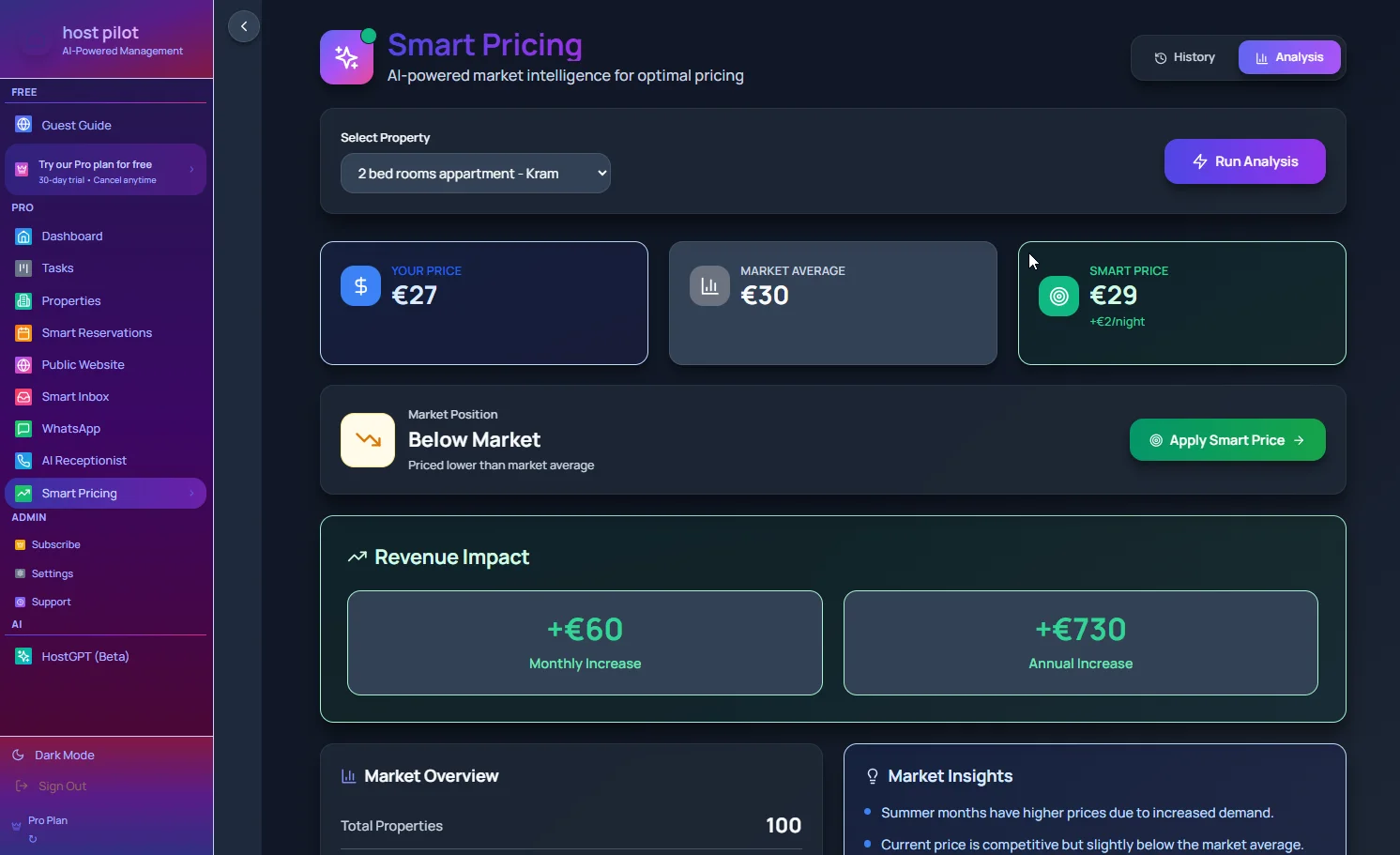
This product walkthrough shows where pricing analysis sits inside Host Pilot. The calculator above remains intentionally transparent so you can challenge every assumption before applying a recommendation.
No. It is a transparent planning worksheet based only on the numbers you enter. Review comparable listings, local events and pickup before changing a live rate.
Start with the payout you must protect after channel fees, payment fees, cleaning economics and fixed operating costs. Then test whether that floor is realistic against comparable total guest prices.
Airbnb says hosts can set a price range, override selected nights and turn Smart Pricing off. Discounts and some rule sets can affect the final price, so preview what the guest pays before publishing.
Model both approaches. Guests compare total trip cost, while your operations still need the clean funded. A separate fee can be transparent, but a high fee may make short stays less competitive.
It can be, provided the direct rate still covers payment processing, support, taxes and risk. Use the channel-fee saving as a decision boundary, not an automatic discount.
Consider one when you manage many listings, highly seasonal inventory or event-driven markets and need frequent market-data updates, portfolio rules or automated repricing.
Keep the rate logic with the property information guests see. Host Pilot can connect a reviewed listing to a direct-booking website, guest guide and communication flow without replacing the pricing specialist or PMS you may already use.