01
Booked
Source, property, dates, status and guest count match the channel record.
Import once
Turn your Airbnb or Booking.com listing into a direct booking website and guest guide.
Reservation operations
Manage every Airbnb reservation as a sequence of verified states: confirm the booking source and dates, check calendar availability, collect only the information you genuinely need, prepare arrival communication, assign turnover work, and close the stay. A dashboard helps you see the work, but the booking channel remains the source of truth for reservation status, payouts and platform decisions.

Use the same five-state board for every stay. The exception column matters as much as the happy path.
01
Source, property, dates, status and guest count match the channel record.
02
Calendar, payment status, access plan and turnover responsibility are clear.
03
The guest has the right message for this stage, without sensitive access details too early.
04
Questions, incidents and changes have an owner and a written record.
05
Checkout, cleaning, damage notes and follow-up are complete.
The point is not more automation. It is knowing which fact is authoritative, who acts next and what must be checked before the guest arrives.
Open the reservation in Airbnb and confirm dates, status, guest count, payout details and any platform notices. Never rely on a copied calendar block alone.
Check that the dates are blocked everywhere they should be. iCal can reduce manual work, but refresh delays mean a last-minute booking still deserves a direct verification.
Confirm turnover, access method, maintenance issues and any missing guest information. Ask only for information needed for the stay or required locally.
Separate confirmation, pre-arrival, check-in and checkout messages. Put stable details such as Wi-Fi, appliance instructions and local tips in the guest guide.
Record incidents, confirm cleaning, review repeated questions and improve the listing, guide or message that caused the friction.
A two-night booking arrives three days before check-in. The host first confirms the reservation in Airbnb, checks that the previous checkout leaves enough cleaning time, assigns the turnover, and sends a short acknowledgement. Access instructions wait until the property and guest details are verified. This order prevents a fast booking from becoming a rushed, unsafe handoff.
Check availability, price and channel rules before promising the change.
Pause operational assumptions and verify the source-channel record.
Assess whether the stay can be delivered safely; document facts and contact the platform when required.
Stop new commitments, preserve evidence and resolve the authoritative reservation first.
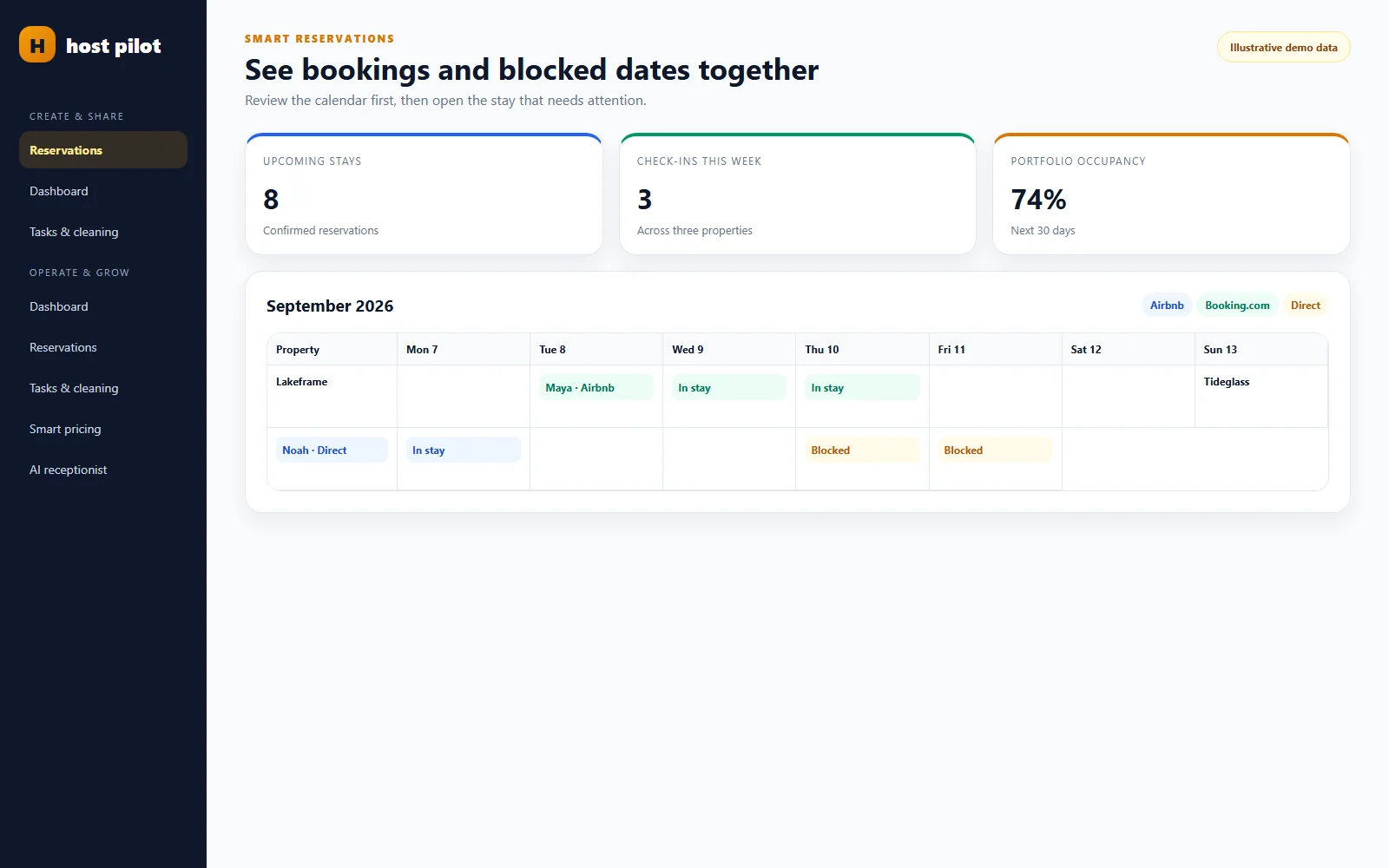
HostPilot can bring property, reservation, calendar, task, guest-guide and message context into one workspace. Ask HostPilot can answer read-only questions from the current account data and open the relevant screen. A reviewed listing can also become a direct-booking website and a digital guest guide.
HostPilot does not replace Airbnb’s reservation record, payout decisions, dispute process, identity checks, taxes, insurance or a full channel manager. Verify consequential actions in the system that owns them.
Treat Airbnb as the source of truth, then use a repeatable checklist for calendar protection, turnover, messages, access and exceptions.
No. iCal updates can be delayed. Verify last-minute availability directly and use a channel manager when near-real-time inventory control is essential.
Send a short confirmation with the next milestone. Avoid sending sensitive access information before the booking and property are ready.
Stable information such as Wi-Fi, appliance instructions, house rules and local recommendations is easier to maintain in one guide link.
A PMS is usually appropriate when multiple channels, team permissions, owner reporting, accounting or high booking volume make manual verification unreliable.
No. Ask HostPilot is read-only. It can explain current account data and open the right screen, but the host makes the change.
Import one listing, review the details, then connect the direct-booking website, guest guide and communication around the same property record.