1. Publish current property facts
Check beds, guest limit, amenities, photos, location wording, rules, and contact details against the real property before sharing a direct booking website.
Built for hosts with 1–10 properties
This guide explains how to reuse accurate Airbnb listing facts for a direct website serving repeat guests, referrals, and demand you generate independently—without disrupting an existing marketplace reservation.
Paste your Airbnb or Booking.com listing URL. Host Pilot imports the property details and opens the guided setup for a branded direct booking website.
Create a free account to generate one property preview. No card needed. Start the trial when you’re ready to share or edit.
Direct answer
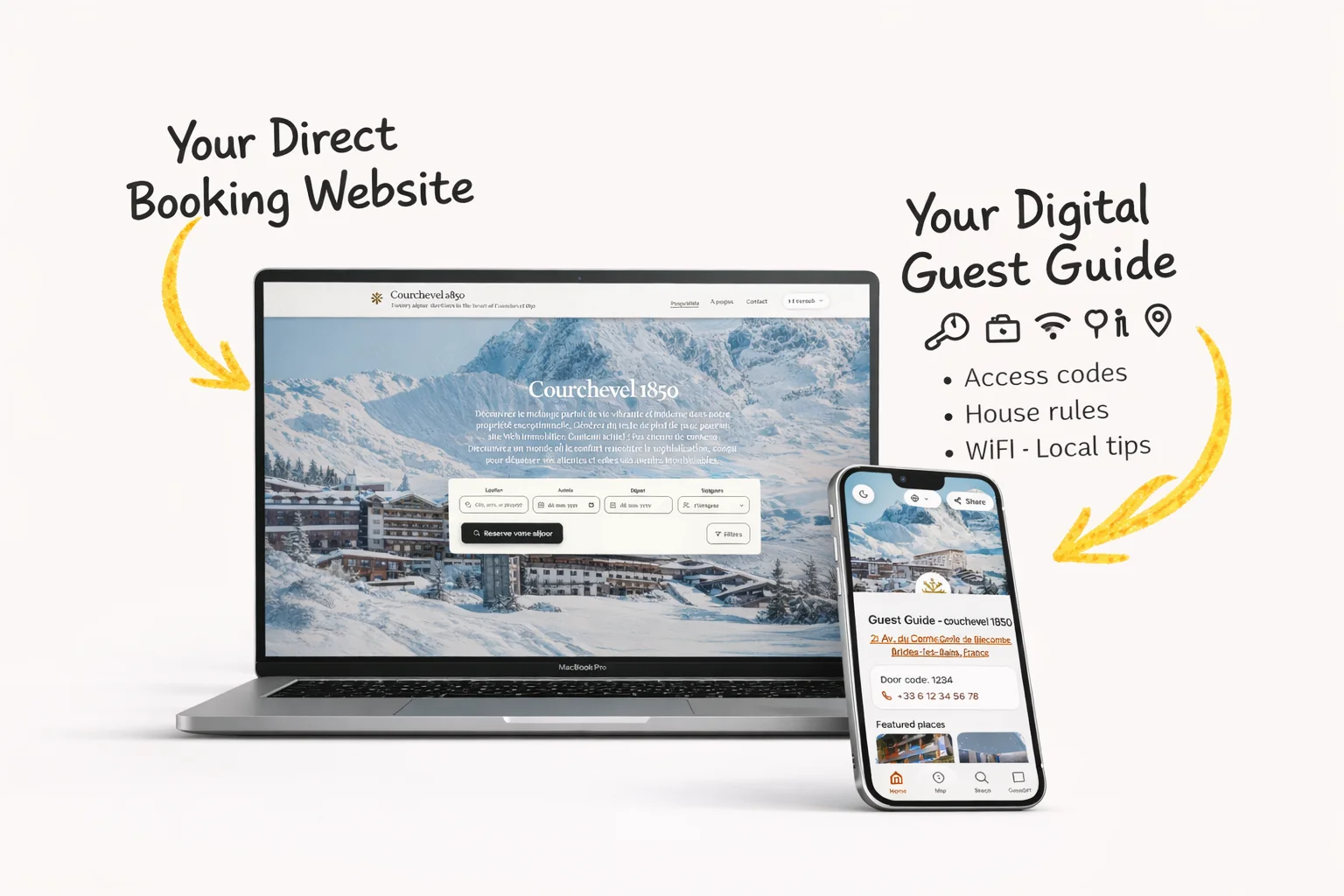
A direct booking website for Airbnb is most useful when a repeat guest or referral wants to understand the property and take a legitimate direct path without rebuilding the whole stay in chat. It should show the current property facts, how availability is checked, what the booking terms mean, and where the guest can ask a question. It complements an Airbnb listing; it does not need to replace every marketplace channel.
The useful distinction is simple. The public direct booking website helps a visitor decide whether the stay is right for them. After a booking is confirmed, the guest guide helps that guest arrive and stay successfully. Keeping those jobs separate makes the public page calmer, keeps sensitive access information private, and means the host does not have to paste the same long operational details into every conversation.

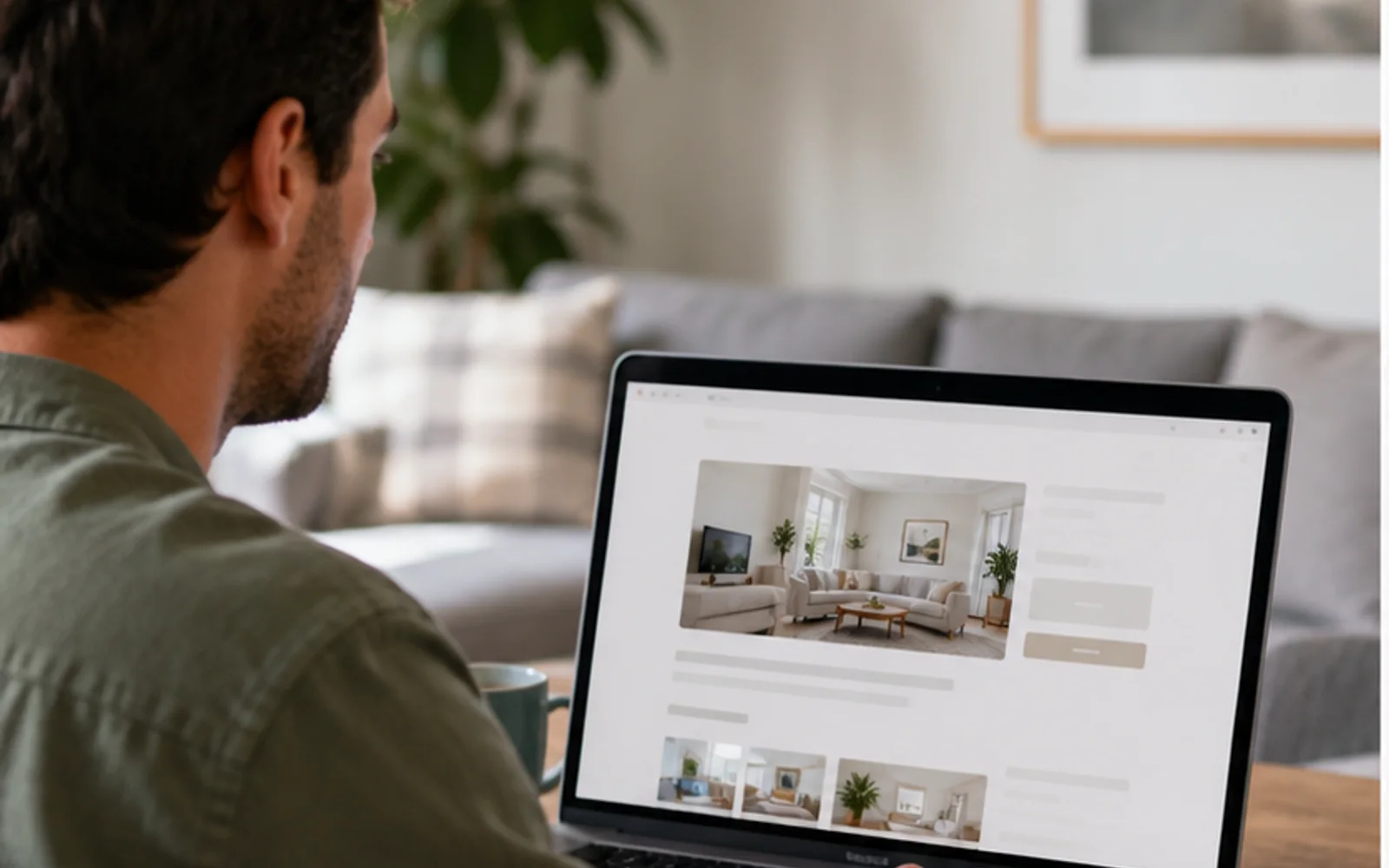
Begin with guests who already have a reason to trust the property: a previous guest, a personal referral, an event attendee, or someone who found your own useful host content. These visitors are not looking for a generic promise. They need to see whether this particular home fits their dates, group, budget, and practical needs. A good direct booking website gives them that context before they contact you.
Do not make the page a copy of every line on Airbnb. Add the information that helps a direct visitor decide: how to enquire or book, what happens before payment, which terms apply, and how confirmation works. Keep descriptions, amenities, guest capacity, and photography consistent with the real home. If a fact changes on one channel, update the other. Trust disappears quickly when a guest sees two versions of the same stay.
A direct path also needs honest boundaries. It is not a shortcut around an existing Airbnb reservation, and it should not pressure a guest to cancel or move a booking. Marketplaces can remain valuable for discovery and trusted transaction processes. The direct website is an owned destination for the relationships and audiences you are allowed to serve directly.
Check beds, guest limit, amenities, photos, location wording, rules, and contact details against the real property before sharing a direct booking website.
Before you confirm dates or send a payment request, check the same source your operation uses for marketplace bookings, owner stays, blocks, and cleaning buffers.
Put the exact property, dates, guest count, total, payment timing, cancellation terms, and contact route in writing so the guest can make an informed decision.
After confirmation, share a mobile guest guide for durable arrival and stay information. Keep sensitive access details and unusual cases under human control.
Show the information a visitor needs before a booking decision: accurate photos, sleeping arrangements, maximum occupancy, location context, amenities, a clear availability process, policies, price presentation where relevant, and a contact method. Make the next step unambiguous. A guest should not have to guess whether they are making an enquiry, checking dates, or completing a booking.
Review the page on a phone. A returning guest may open it while planning a weekend with friends, not while sitting at a desk. The important information should be easy to scan and should not depend on a decorative image or a hidden accordion. Clarity wins when a visitor is comparing dates, costs, and who will sleep where.
Keep arrival codes, detailed access steps, Wi-Fi, appliance instructions, rubbish, house rules, and local recommendations in a mobile guest guide. Guests can reopen the guide during the stay, while the public page remains a simple decision page.
Host Pilot can use one listing as the starting point for a direct booking website, a shareable digital guest guide opened by link or QR code, and connected guest communication. That reduces duplicate setup for a small host, but every property fact, policy, and contact still needs a human review.
Realistic host scenario
Example, not a customer story: A guest who booked through Airbnb last year wants to return with two friends. Instead of sending a price first, the host checks the availability source, confirms the guest count, and sends the current direct booking website. The guest can see bed layout, booking terms, and the next action before deciding. Once the booking is confirmed, the host sends a concise confirmation and the same mobile guide used for all stays.
This is a useful direct booking workflow because it preserves context. The host remains available for a human question, while the website holds the decision information and the guide holds durable stay information. It also gives the host a simple way to improve: every repeated question becomes a signal to clarify the website or guide, rather than another paragraph copied into chat.
Do not publish stale listing facts, hidden policies, or a payment link before dates and terms are clear. Do not create a second calendar that disagrees with the availability source your team actually trusts. And do not put private access information on a public website. Those shortcuts create more guest questions, not fewer.
Also avoid overbuilding. A small host does not need a complicated commerce project to give a repeat guest a direct route. One accurate property page, a known availability check, plain-language terms, a good confirmation, and a helpful guide are a strong operating foundation. Add complexity only where it solves a problem you can see in your actual guest journey.
Yes. A host can maintain an Airbnb listing and also create a direct booking website for repeat guests, referrals, and other legitimate direct audiences. Keep each channel accurate and respect the agreements that apply to an existing marketplace reservation.
It should explain the property, guest fit, availability process, total-price terms, policies, contact route, and next step. Keep sensitive arrival details in the post-booking guest guide rather than on a public page.
It gives a returning guest or referral one place to check property facts, booking terms, and the next action. After confirmation, a mobile guest guide can hold arrival, Wi-Fi, rules, and stay information that guests need repeatedly.
Not always. A small host can begin with one accurate property page, one reliable availability source, clear written terms, and a repeatable confirmation and guide-sharing flow. More complex tools may be useful as channels, properties, or team responsibilities grow.
Start with the listing you already maintain, review the public property facts and direct terms, then connect the website to a private post-booking guest guide.
2 min - see exactly how it works
Hosts usually look for direct booking website airbnb when they want a simpler way to handle guest communication, arrivals, bookings, or day-to-day operations without adding extra admin.
Give returning guests a direct booking path instead of sending them back through OTA fees.
Present your properties, policies, and guest experience in your own booking environment.
Build a healthier revenue mix by adding direct bookings alongside marketplace demand.
Typical use case
A host keeps attracting first-time demand on Airbnb, then sends repeat guests to a direct booking site for future stays and longer bookings.
Quick answers for hosts comparing options and trying to fix guest communication, arrival, and operations pain points.
This is a direct booking website setup for Airbnb hosts who want a branded way to take repeat or referred bookings directly.
You publish your properties on your own booking site, share that link with guests, and use it as your direct reservation path outside OTA marketplaces.
Yes. Hosts often keep Airbnb and Booking.com for discovery while also using a direct booking website for repeat and referral demand.
Yes. A host can maintain an Airbnb listing and also create a direct booking website for repeat guests, referrals, and other legitimate direct audiences. Keep each channel accurate and respect the agreements that apply to an existing marketplace reservation.
It should explain the property, guest fit, availability process, total-price terms, policies, contact route, and next step. Keep sensitive arrival details in the post-booking guest guide rather than on a public page.
It gives a returning guest or referral one place to check property facts, booking terms, and the next action. After confirmation, a mobile guest guide can hold arrival, Wi-Fi, rules, and stay information that guests need repeatedly.
Not always. A small host can begin with one accurate property page, one reliable availability source, clear written terms, and a repeatable confirmation and guide-sharing flow. More complex tools may be useful as channels, properties, or team responsibilities grow.
Browse nearby host workflows from the hub so you can compare practical next steps without starting over.
Use one reviewed property source for the public offer and the post-booking guest experience.
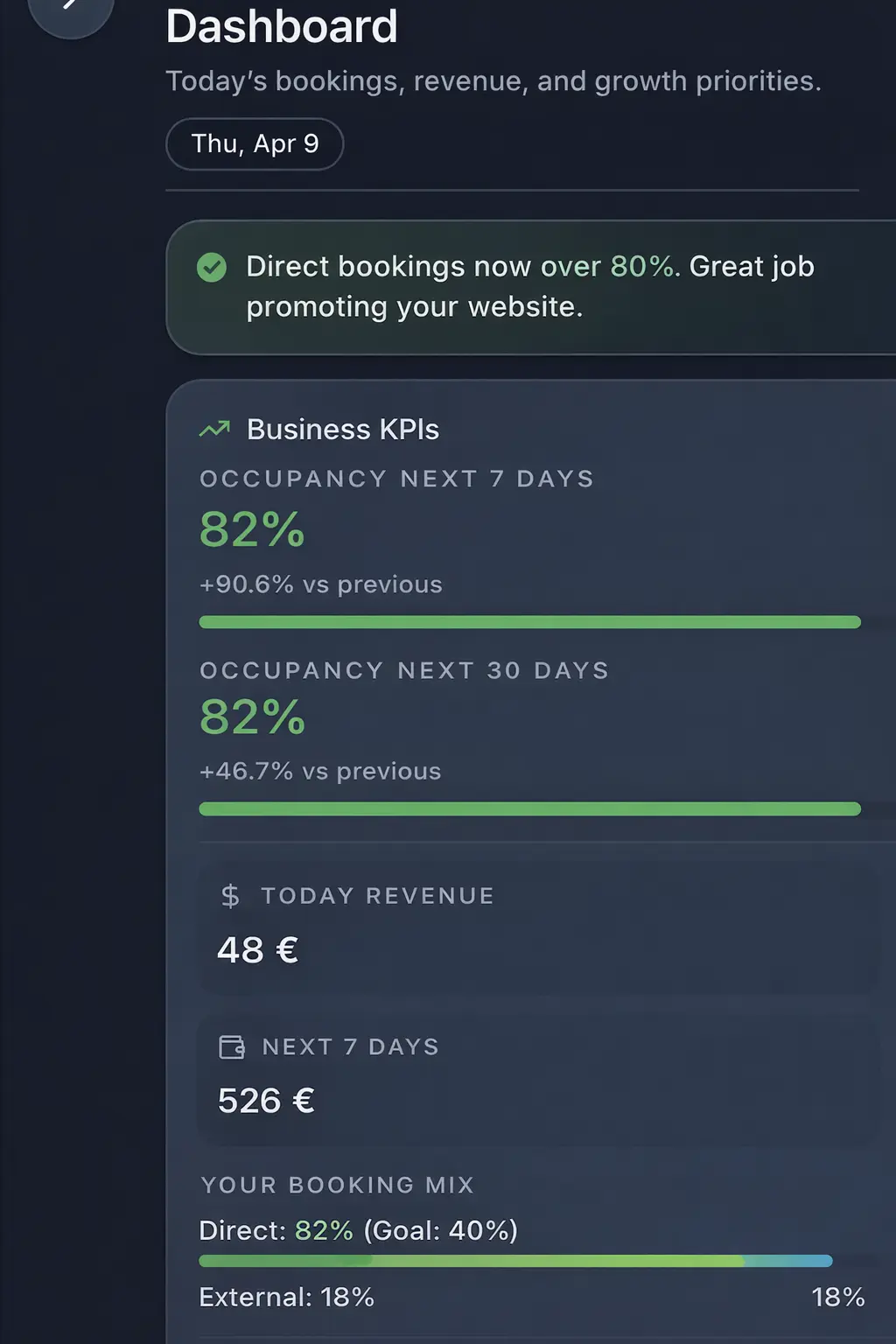
Listing content becomes a branded direct-booking starting point
Use Host Pilot to connect guest communication, guest guides, direct bookings, and operations in one workflow built for smaller host teams.