Import once

Turn your Airbnb or Booking.com listing into a direct booking website and guest guide.

AI inspiration for hosts

Hiking and Cycling Rental Ideas for Hosts

Good hiking and cycling rental ideas handle the return from an outdoor day: equipment storage, mud, wet clothing and a comfortable place to plan tomorrow. Compare a four-guest cottage adaptation with a six-guest courtyard lodge. Local access and the full gear-reset routine must fit the real property before an outdoor-focused promise makes sense.

Concepts are not real or bookable properties.

Hiking & Cycling Stays

Start with the guests you want to welcome and the property you have. Compare the experience and the work behind it before choosing a direction.

2 of 2 concepts match · Compare up to three

Effort describes the routines in the brief: standard interior upkeep, additional outdoor or laundry routines, or specialist systems. It is not a budget or profitability rating.

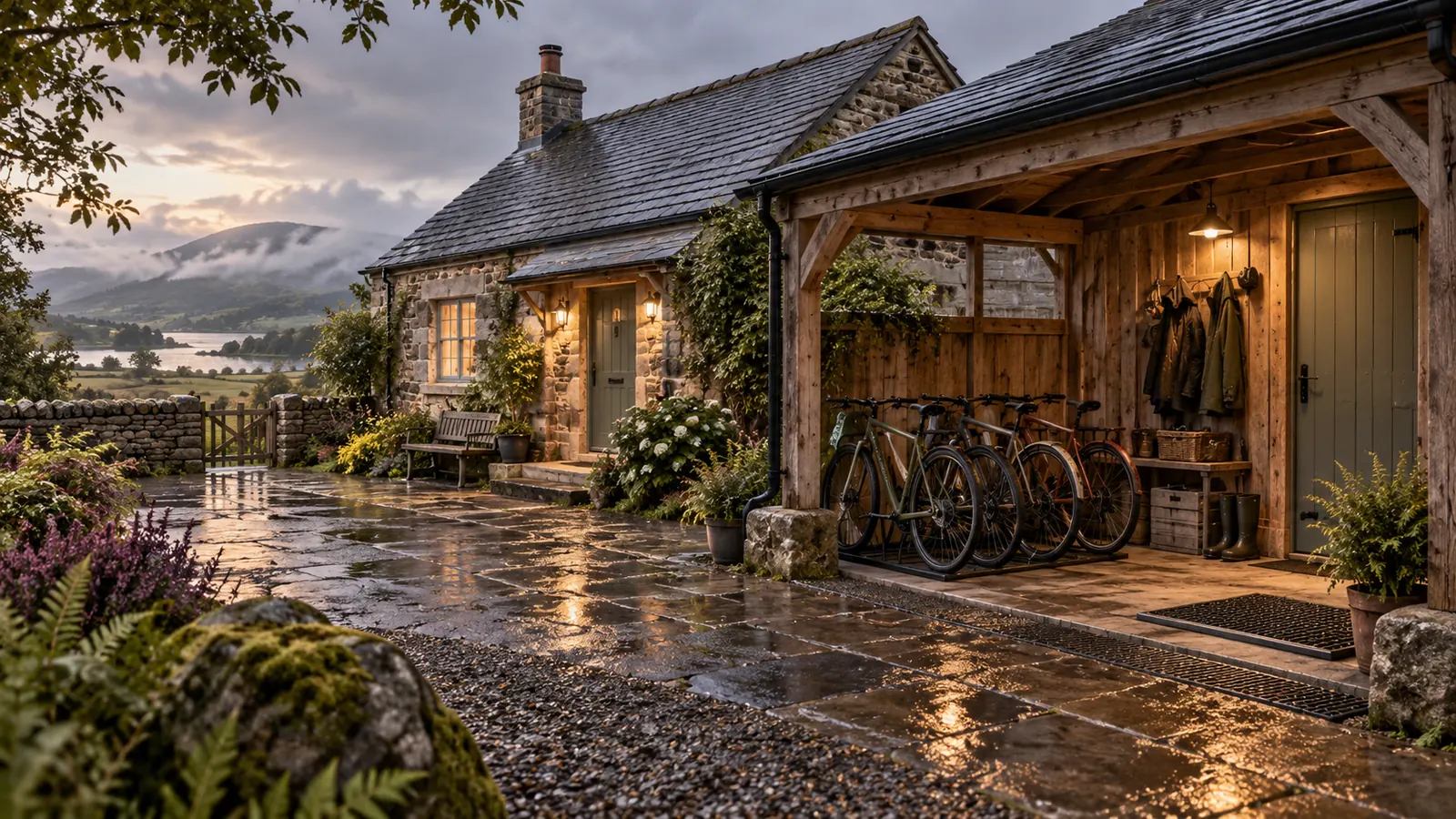
AI fictional hiking and cycling rental concept, Bootline Cottage, with a stone cottage and covered timber bicycle and gear porch

AI concept · not real

Bootline Cottage

Bootline Cottage is a fictional four-guest cottage adaptation built around what happens after an outdoor day. Its timber gear porch links boot cleaning, drying storage and four imagined bicycle positions, leaving the stone cottage interior for eating, resting and sleeping.

Adapt an existing property

Additional routines

Read the host-fit brief

Could this fit your property?

An existing cottage host with an appropriate outbuilding, useful local routes and capacity to maintain a wet-gear reset routine.

Adapt an existing property · Additional routines

Guest focus: Walkers & cyclists, Small groups.

Suitable setting: An existing cottage with a suitable outbuilding and useful walking or cycling options for a real operator to verify.

When another approach fits better
No suitable storage, unresolved drainage, limited drying capacity or unsuitable local access makes a general cottage stay a better fit.
Minimum practical requirements
  • An appropriate covered storage area planned for four bicycles and guest gear
  • Ventilation or suitable drying equipment separate from bedrooms
  • Cleaning-water disposal, access and local-route information verified for the real location
Changes to plan
  • Connect boot cleaning and a return bench to the outbuilding
  • Install reviewed racks, lockable storage and a practical drying rail
  • Prepare current route, transport, weather-source and local-service information for the eventual location
Ongoing hosting checklist
  • Inspect storage locks, racks and the bicycle access route
  • Remove mud and clean boot trays and rinsing surfaces
  • Check drying equipment and ventilation and refresh route-access information
Example guest journey — fictional
Fictional example: four guests return with wet coats and muddy boots, store their bicycles and use the gear porch before entering the cottage. By departure they can collect their equipment from one organized area. Drying performance and storage security would need verification by a real operator.

Editorial fit guidance, not a construction specification, safety certification, cost estimate or return forecast.

Explore the concept
Discover the sample guest guide

See how guests find access details, Wi-Fi, local tips, property highlights and house rules.
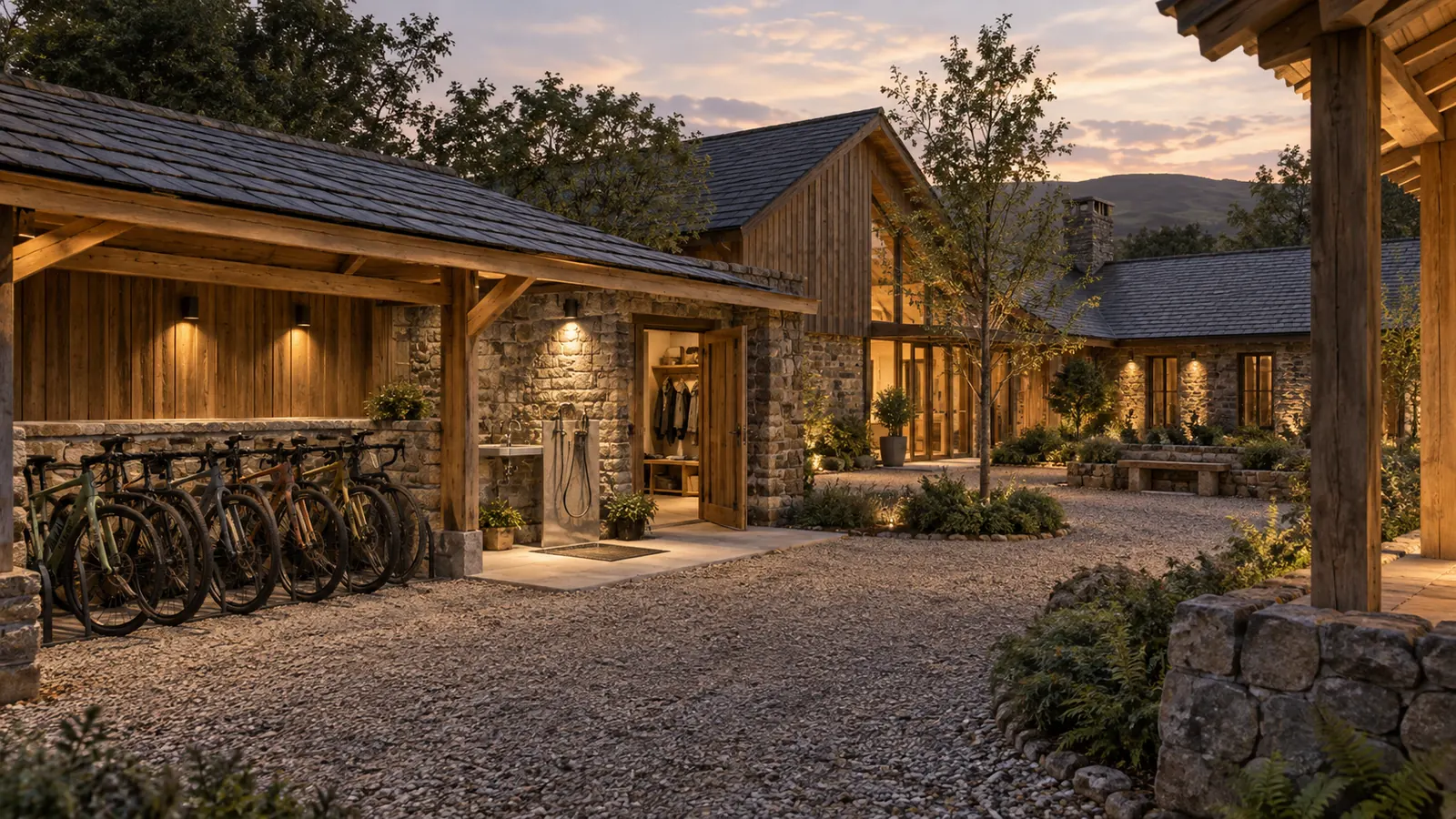
AI fictional Routeyard Lodge concept showing a timber and masonry service courtyard with bicycle positions, rinse corner and drying-room entrance

AI concept · not real

Routeyard Lodge

Routeyard Lodge is a fictional six-guest outdoor stay that gives equipment its own arrival sequence. A timber-and-masonry service courtyard connects six imagined bicycle positions, rinsing and drying with a shared planning room, while three bedrooms sit away from the return routine.

New build or substantial conversion

Additional routines

Read the host-fit brief

Could this fit your property?

A host developing a small lodge with enough room to plan equipment storage, drying, guest gathering and sleeping as one coherent layout.

New build or substantial conversion · Additional routines

Guest focus: Walkers & cyclists, Small groups.

Suitable setting: A suitable rural development site or substantial conversion with verified outdoor access, drainage and room for separate service and sleeping areas.

When another approach fits better
A constrained parcel, sensitive neighbors, unresolved runoff or weak local-route suitability makes a smaller adaptation or another guest focus preferable.
Minimum practical requirements
  • Room for six bicycle positions, drying gear and an unobstructed guest return route
  • Reviewed drainage, ventilation, water use and sleeping-room separation
  • Useful local routes, transport and service information verified at the eventual site
Changes to plan
  • Plan a dirty-to-clean courtyard sequence and separate equipment storage
  • Provide a six-seat planning table with space for guest belongings
  • Document verified route-access and weather sources without implying guiding or rescue services
Ongoing hosting checklist
  • Inspect locks, racks and the rinse area and keep access clear
  • Clean the drying room and check ventilation and equipment
  • Maintain drainage and update local route, transport and service information
Example guest journey — fictional
Fictional example: a small group stores equipment in the courtyard and reviews the next day around the shared table. Changing weather leads them to adjust their plans using information a future host would verify. No route, trail permission or safe-weather promise exists for this fictional site.

Editorial fit guidance, not a construction specification, safety certification, cost estimate or return forecast.

Explore the concept
Discover the sample guest guide

See how guests find access details, Wi-Fi, local tips, property highlights and house rules.

How to choose between these hiking and cycling rental ideas

Choose Bootline Cottage when an existing cottage has an appropriate outbuilding and useful local outdoor options. Choose Routeyard Lodge when a new site or substantial conversion can give six guests a complete return, storage, rinse and drying sequence. If storage, access or drainage cannot be resolved, a general cottage concept is a better starting point.

Compare the two fictional category concepts
Your decisionBootline CottageRouteyard Lodge
Guest fitUp to four guests bringing ordinary bicycles or walking gearUp to six guests with a shared equipment routine
Starting propertyExisting cottage and suitable outbuildingNew lodge or substantial conversion with service courtyard
Signature routineCovered gear porch before entering the cottageCourtyard return sequence leading to a planning table
AdaptationsStorage for four bicycles, boot cleaning and ventilated dryingSix bicycle positions, rinse area, drying room and sleeping separation
Ongoing workLocks, racks, mud removal, drying and information updatesThe same tasks plus courtyard drainage and a larger gear area
Choose another approach whenUseful routes or appropriate storage are missingService space overwhelms the parcel or nearby homes
AI fictional hiking and cycling rental concept, Bootline Cottage, with a stone cottage and covered timber bicycle and gear porch
Bootline Cottage: AI-generated fictional design direction.
AI fictional Routeyard Lodge concept showing a timber and masonry service courtyard with bicycle positions, rinse corner and drying-room entrance
Routeyard Lodge: AI-generated fictional design direction.

Adapt the experience to your actual property

  • Check the eventual location first. Identify lawful route access, transport options, seasonal restrictions and useful services. A countryside image does not establish that a guest can walk or cycle directly from the property.
  • Plan where ordinary bicycles and bulky equipment go before entering living rooms. Check the storage capacity, door access, racks and locking arrangements with actual equipment.
  • Give wet coats and footwear an appropriate drying area with ventilation or suitable equipment. Keep it separate from bedrooms and review the real drying capacity and reset time.
  • Add cleaning facilities only after reviewing water use, surfaces and lawful wastewater disposal. Explain which equipment guests can clean and what remains their responsibility.
  • Maintain current links to official weather and access information, plus verified local services. A guest guide can explain the property routine; it does not replace route judgment, professional guiding or emergency services.

Check the operating fit

  • Are useful routes and their access conditions verified for the real location?
  • Can the advertised number of bicycles and guest gear fit in storage?
  • Can wet equipment dry without spreading moisture through sleeping rooms?
  • Can the operator maintain locks, racks, equipment and clean access?
  • Is cleaning-water disposal appropriate and verified?
  • Who refreshes route, transport, weather-source and local-service information?

An example of putting the idea to work

Fictional operating example: a cottage host considers a cycling focus because they have a detached storage building. Before advertising, they test bicycle access, plan a drying routine and check cleaning-water disposal. The guide then explains storage, guest cleanup and current official information sources. If the local route access is unsuitable, the host keeps a general cottage positioning instead.

What the concept does and does not promise

  • Neither concept has certification, theft-proof storage, verified trail access or a guarantee of route safety.
  • Bicycle hire, guiding and e-bike charging are not included. Any future charging provision needs a separate review of the actual installation and operating arrangements.
  • Maps, service contacts, weather and access details in a real guide must be verified and maintained; this fictional collection invents none.

Demand signals and their limits

ADFC’s March 2026 analysis reports a substantial German cycling-holiday market in 2025, while also noting a slight decline in cycling holidays and day trips. This is evidence of an established regional activity, not universal growth or demand for this collection. Tourism-body guidance consistently addresses storage, drying and current local information. Those operating needs make a useful host planning theme; they do not establish Google keyword volume, local bookings or project returns.

Evidence reviewed October 2, 2026. Validate your own market before committing to a project.

Related inspiration from the existing library

Lakeframe Cabin

Explore weather-aware arrival and wet-gear handling; this does not establish dedicated bicycle storage or trail access.

Hearthfold Cottage

Compare a cottage’s sheltered arrival and gathering space with a dedicated equipment and drying outbuilding.

Frequently asked questions

Where should I start with hiking and cycling rental ideas?
Start with verified local outdoor suitability, then work through equipment arrival, storage, cleaning and drying. A scenic setting alone is not enough.
Do I need a purpose-built bicycle building?
Not necessarily. An appropriate existing outbuilding may suit an adaptation. Verify the real storage capacity, access, locking arrangements and guest routine before describing it.
Can I promise secure bicycle storage?
Describe the actual locking and storage features accurately. An imagined rack or lock is not evidence of theft-proof storage or an insurance guarantee.
Does the collection include e-bike charging or rentals?
No. Guests are imagined bringing their own ordinary bicycles. Hire, guiding and charging would require separate verified arrangements.
What should the guest guide explain?
The verified equipment routine, property access, current official route and weather sources, transport and local services. Avoid invented routes, permissions or rescue promises.
Are these certified outdoor accommodations?
No. Both are fictional, non-bookable concepts. The linked tourism criteria inform planning and do not confer certification on these designs.

Turn a real property into a clear guest experience

Once your property and amenities are real, accurate expectations belong on your website and in the guest guide. Host-Pilot can generate those starting points from a listing URL for you to review and edit.

Explore direct booking websitesExplore digital guest guides

What these concepts are

Each concept is an original creative direction: identity, target guest, setting, signature feature and an example digital property experience. It is inspiration—not an address, listing, review, availability claim, architectural drawing or engineering plan.

Built with the real Host-Pilot engine

The property experience uses the same direct-booking website engine Host-Pilot creates from a host’s listing URL. Already operate a real stay? Generate your website and guest guide, then edit and run it from your own Host-Pilot account.

Paste your listing URL