Read the floor plan before the mood board
A tiny house removes circulation space, so every movement matters. Identify where bags go, whether two people can pass in the kitchen and whether the dining surface also serves as a desk. Wide-angle photographs can make a room feel larger; dimensions, bed type and a simple layout description are more useful.
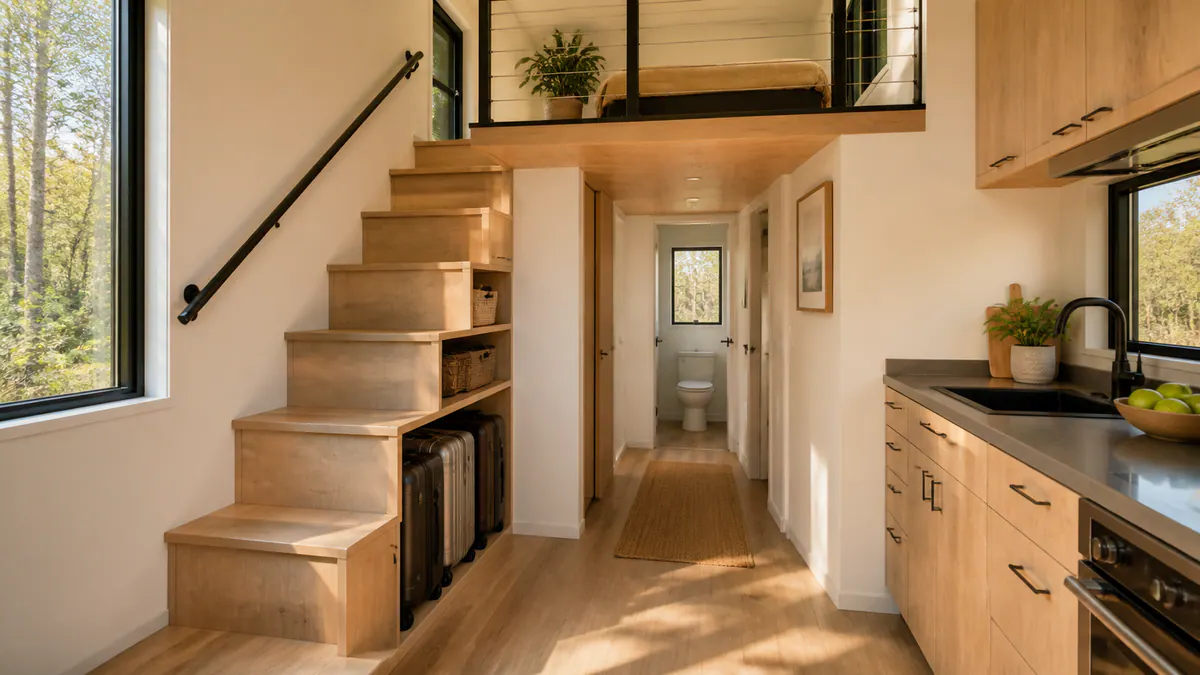
Lofts create character and preserve ground-floor space, but they bring ladders, low headroom and nighttime bathroom trips. A ground-floor bed generally suits longer stays and guests with mobility constraints. A fixed stair can double as storage but still consumes precious floor area.
How much kitchen and bathroom do you need?
For one or two nights, a kettle, refrigerator and simple breakfast setup may be enough. Longer stays need an honest inventory: hob, oven or microwave, cookware, preparation surface and somewhere to eat. Check ventilation when cooking and whether strong smells reach the bed.
Bathrooms range from conventional plumbing to composting toilets and compact wet rooms. Neither is inherently bad, but the listing should explain it. Water pressure, hot-water capacity, towel drying and visual privacy often matter more than a designer basin.
Who tiny stays suit—and when outdoor space matters
Two adults who pack lightly are the clearest fit. A sofa bed may raise the technical capacity without creating comfortable privacy for four. Families should check guardrails, stair gates and whether the main living area disappears when extra beds are opened.
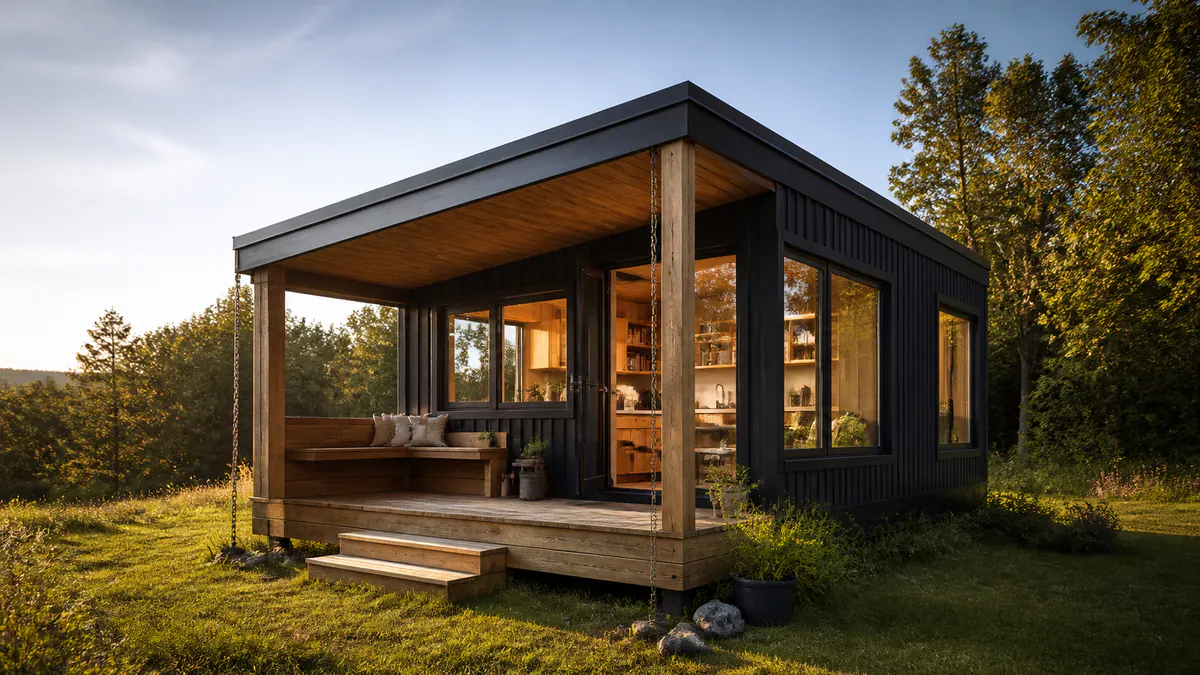
Airbnb’s 2026 Australian tiny-home findings (opens in a new tab) connect wishlisted small stays with short restorative trips and outdoor features. Because this is platform-commissioned Australian research, use it as a signal rather than a universal rule. A sheltered deck can effectively add a room; in poor weather, the interior must still work.
Editorial scenario: two bags and one rainy morning
Rain closes the deck, so breakfast, wet coats and two open bags move indoors. If hooks, under-seat storage and a real table exist, the tiny home remains calm. If every surface already holds decoration, the same footprint feels cramped. This is an editorial scenario designed to expose a booking decision, not a documented stay.
What current research and traveler evidence add
Statistics retain their sample, geography and period. Review themes are synthesized decision patterns, not Host-Pilot ratings, testimonials or reproduced quotations.
Short-trip sentiment: Nearly 80%
of travelers in Airbnb-commissioned Australian 2026 research said shorter trips feel less stressful and more enjoyable; the finding is market-specific. source
Evidence base for rental decisions: 900+ travelers
participated in Expedia and Phocuswright’s 2025 US short-term-rental study, alongside 480+ hosts and 13 interviews. source
Clever storage earns more praise than decorative clutter
Recent review patterns repeatedly favor hooks, bag space and surfaces that remain usable. Guests notice when “tiny” has been designed rather than merely compressed.
Lofts divide opinion
Some travelers love the cocooned sleeping space; others find ladders and limited headroom tiring. Precise photos and access descriptions are essential.
Compare tiny-home layouts
| Layout | Loft | Storage | Kitchen and bathroom | Suitable capacity |
|---|---|---|---|---|
| Weekend micro-cabin | Ladder loft | Minimal | Snack station; compact shower | 1–2 light packers |
| Full tiny home | Stair or ground bed | Built-in | Cooking kitchen; private bath | 2 for several nights |
| Family compact stay | Mixed beds | Must be generous | Full essentials | 2 adults plus children if verified |
| Studio-style tiny home | No loft | Under-bed or wall storage | Conventional compact facilities | 1–2 with easier access |
Tiny-house booking checklist
- Confirm bed dimensions, loft headroom and ladder or stair type.
- Find a specific place for every traveler’s luggage.
- Check the actual cooking appliances and preparation surface.
- Identify the toilet type, hot-water setup and bathroom privacy.
- Ask what happens to living space when extra beds are opened.
- Treat sustainability claims as unverified unless the systems are explained.
Continue exploring
Frequently asked questions
How many people fit comfortably in a tiny house?
Often one or two adults. Use the exact floor plan, bed setup, storage and bathroom—not the maximum occupancy alone—to judge comfort.
Are tiny-house lofts difficult to access?
They can be. Check whether access uses a ladder or stair, the tread width, handholds and headroom before booking.
Do tiny homes have full kitchens?
Some do; others provide only a refrigerator and countertop appliances. Verify every appliance needed for your stay.
Are tiny homes automatically sustainable?
No. Small floor area may reduce some resource use, but sustainability depends on construction, energy, water, travel and operations. Look for specific evidence.
What makes a tiny home feel spacious?
Good daylight, clear surfaces, proportional furniture, real storage and usable outdoor space matter more than decorative minimalism.
Sources and further reading
Reviewed 2026-08-26. Sources support general category guidance; verify current property details, local conditions and booking terms directly.
- Airbnb’s 2026 tiny-home findings Australian traveler survey and Airbnb wishlist data; 2026
- Expedia and Phocuswright short-term-rental guest research More than 900 US short-term-rental travelers, 480 hosts and 13 interviews; 2025
- Expedia’s traveler-review research Expedia Group consumer research about vacation-rental reviews; Reviewed August 2026
- Booking.com’s 2026 travel predictions Survey of 29,733 travelers across 33 countries and territories; July–August 2025