Which cabin setting fits your trip?
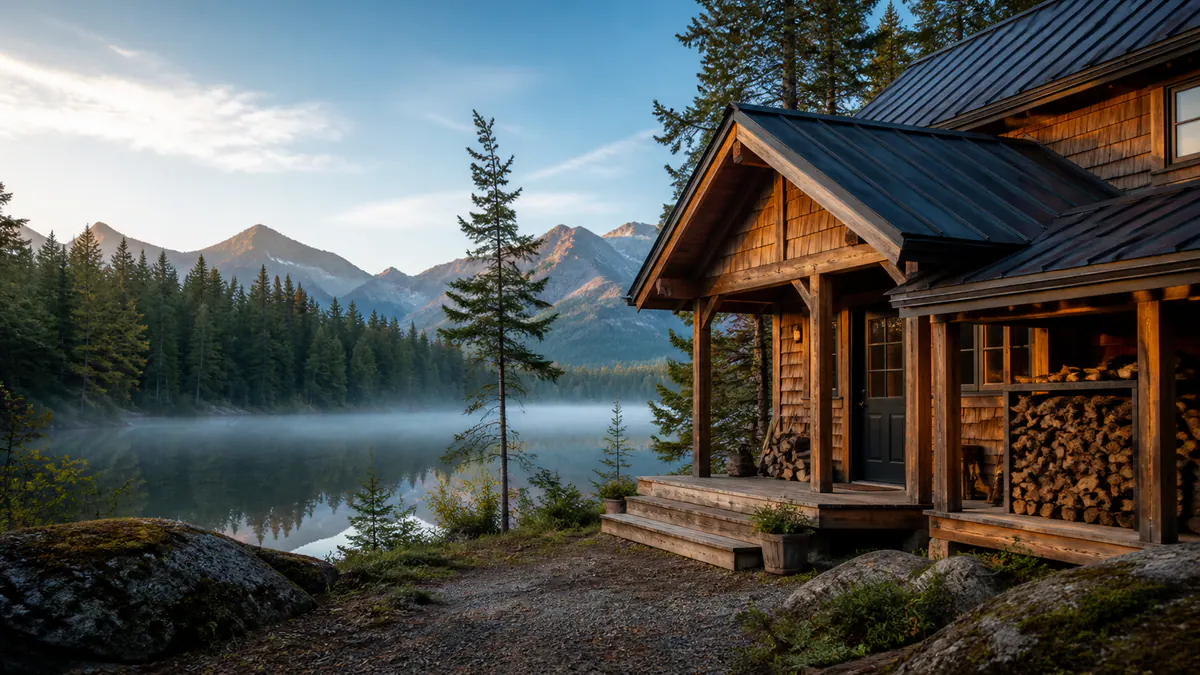
A forest cabin offers shade, enclosure and a strong sense of retreat. A mountain cabin exchanges easier access for altitude, views and fast-changing weather. Lakeside stays support swimming, paddling and slow mornings, but shoreline access may be steep, shared or seasonally different from the photographs. Remote cabins make solitude the product; they also make fuel, food and communication more important.
Start with how you will spend the day. If the cabin is a base for touring, road time and parking matter. If it is the destination, check the view from the main room, outdoor shelter, kitchen, seating and what can be done in rain. “Secluded” should not be assumed to mean silent, private or unreachable by other guests.
Heating, roads and seasonal access are core amenities
A fireplace is atmosphere; a dependable heating system is comfort. Ask whether firewood is supplied, whether the stove is the primary heat source and how long it takes to warm the building. In warm climates, shading, ventilation and screens can matter more. Photographs taken in snow say nothing about road clearance.
Confirm the final road surface, gradient, winter equipment, parking distance and whether arrival after dark is sensible. Save directions offline. The Leave No Trace principles (opens in a new tab) are a useful foundation around waste, wildlife and durable surfaces, but property-specific rules and local fire restrictions take precedence.
How much connection do you really need?
“Wi-Fi available” can mean video-call speed or a weak shared hotspot. Ask for realistic performance if work, streaming or medical communication matters. Mobile coverage may vary by network and weather. A digital guide should never replace a backup contact method, visible emergency information and clear instructions for utilities.
Themes below synthesize recurring decision points across the cited platform review research, current public category pages and publicly visible property material reviewed for this guide. They are not Host-Pilot reviews, ratings, testimonials, copied quotations or claims about every stay. Cabin reviews consistently reward warmth, cleanliness, a well-equipped kitchen and accurate directions. Recurring friction comes from cold arrival, difficult final roads, missing basic cookware and connectivity that was described too confidently.
Editorial scenario: the last ten kilometres
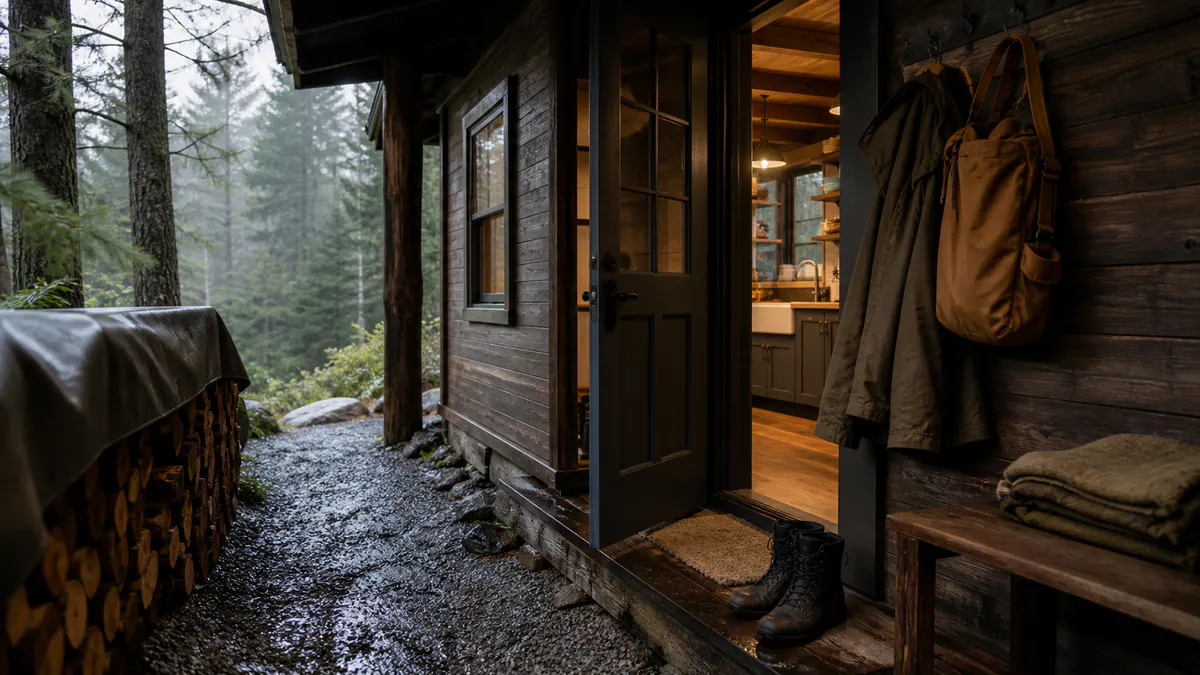
The main road becomes gravel, mobile signal drops and rain begins. The prepared traveler already downloaded the route, knows the gate code and arrives with food before darkness. Inside, the heat is straightforward and wet coats have somewhere to hang. This fictional scenario shows why operational detail matters as much as the fireplace photograph.
What current research and traveler evidence add
Statistics retain their sample, geography and period. Review themes are synthesized decision patterns, not Host-Pilot ratings, testimonials or reproduced quotations.
Rural-stay interest: 86%
of Airbnb’s January 2026 US survey sample expressed interest in remote or rural stays; it measures interest, not completed cabin bookings. source
Review-led decisions: 48%
of travelers in Expedia Group consumer research ranked reviews above family recommendations; consult the source for methodology and market scope. source
Warmth and readiness define the welcome
Recent cabin review patterns repeatedly value a warm arrival, dry firewood, working lighting and instructions that remove uncertainty.
Remoteness works when access is described precisely
Guests accept gravel, snow or weak signal more readily when the final road, vehicle needs and offline directions are explained before travel.
Compare cabin settings
| Setting | Main appeal | Access question | Comfort question |
|---|---|---|---|
| Forest | Shelter, shade and enclosure | Is the final road muddy or narrow? | Are dampness and insects managed? |
| Mountain | Views, snow and trail access | Is seasonal equipment required? | Is heating reliable at altitude? |
| Lakeside | Water access and open outlook | Is the shoreline private and safe? | Are towels, drying and screens provided? |
| Remote country | Quiet and dark skies | How far is fuel, food and help? | What powers heat, water and communication? |
Cabin booking checklist
- Verify the final road, parking distance and seasonal vehicle requirements.
- Separate decorative fireplace claims from the primary heating system.
- Check firewood, fire restrictions and safe operating instructions.
- Confirm kitchen equipment, drinking water and nearby supplies.
- Ask what Wi-Fi and mobile descriptions mean in practical use.
- Download directions and emergency contacts before leaving coverage.
Continue exploring
Frequently asked questions
What should I check before renting a remote cabin?
Confirm road conditions, vehicle needs, heating, drinking water, power, connectivity, food distance and an offline arrival plan.
Is a fireplace enough to heat a cabin?
Not necessarily. Ask whether it is the primary heat source, whether fuel is included and how the property stays warm overnight.
Are lakeside cabins always directly on the water?
No. “Lakeside,” “lake view” and “lake access” can describe different relationships. Verify the map, path, shoreline and whether access is shared.
Can I work remotely from a cabin?
Only if the operator can describe stable service that fits your tasks. Keep a backup plan where communication is essential.
How do I choose a family cabin?
Prioritize safe circulation, separate sleep zones, heating guards, practical dining, laundry or drying space and age-appropriate water or deck access.
Sources and further reading
Reviewed 2026-08-26. Sources support general category guidance; verify current property details, local conditions and booking terms directly.
- Airbnb’s 2026 most-wishlisted stays research Focaldata survey of 2,000 US adults plus Airbnb wishlist data; January 2026
- Expedia and Phocuswright short-term-rental guest research More than 900 US short-term-rental travelers, 480 hosts and 13 interviews; 2025
- Expedia’s traveler-review research Expedia Group consumer research about vacation-rental reviews; Reviewed August 2026
- Leave No Trace seven principles General responsible outdoor-recreation guidance; Current guidance reviewed August 2026