What should “unique” mean?
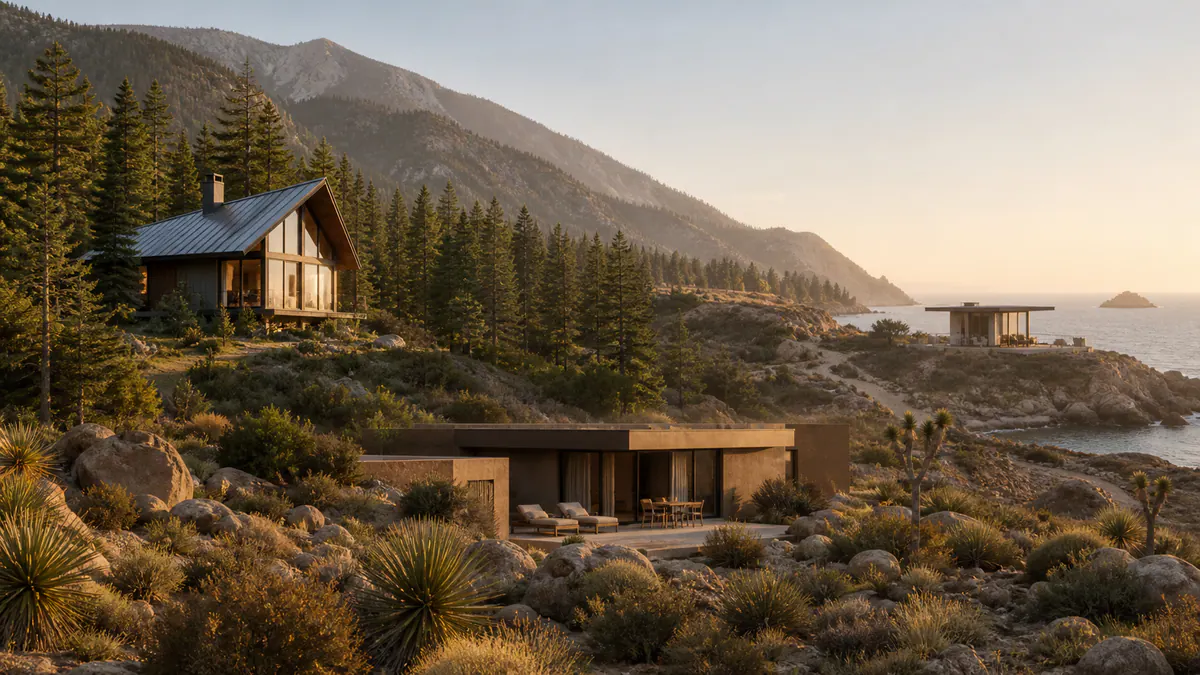
Architectural novelty changes space: a treehouse raises the viewpoint, an A-frame creates a steep interior volume, and a converted structure carries its former use into the stay. Setting-led uniqueness comes from immediate landscape—dark sky, shoreline, forest or working land. Immersive themes use story and material consistently rather than filling rooms with props.
Airbnb’s 2026 wishlist research (opens in a new tab) reports that more than half of its surveyed US adults could be inspired toward a new destination by a unique listing. Because the research is commissioned by a marketplace, it is best read as evidence of interest, not proof that every unusual property provides value.
How do you test novelty against usability?
Find the signature feature, then ask what it costs in daily comfort. Curved walls may reduce storage; panoramic glass may need nighttime screening; a remote viewpoint may require a difficult road. The point is not to eliminate tradeoffs. It is to choose the tradeoff intentionally.
Read photographs as a sequence: approach, entrance, main room, bed, bathroom, kitchen and outdoor area. If essential spaces are absent, ask why. A striking exterior cannot tell you whether two guests can sit comfortably, control light or reach the bathroom without a ladder.
When the stay becomes the destination
Property-led trips need fewer nearby attractions but more on-site resilience. A strong view needs comfortable seating; a stargazing deck needs safe nighttime access; a long soaking bath needs enough hot water. Plan food and arrival so the first evening does not depend on distant businesses staying open.
Themes below synthesize recurring decision points across the cited platform review research, current public category pages and publicly visible property material reviewed for this guide. They are not Host-Pilot reviews, ratings, testimonials, copied quotations or claims about every stay. Unique-stay reviewers repeatedly praise a sense of discovery, memorable architecture and hosts who explain unfamiliar systems. Recurring disappointment follows exaggerated photographs, awkward beds, weak climate control and a signature amenity that was unavailable.
Editorial scenario: one remarkable room, one ordinary question
A glass bedroom frames stars and trees, but the guest first checks how the curtains close and where the bathroom is. Once those questions have good answers, the dramatic room can do its work. This fictional scenario captures the best rule for unusual stays: protect wonder with practical detail.
What current research and traveler evidence add
Statistics retain their sample, geography and period. Review themes are synthesized decision patterns, not Host-Pilot ratings, testimonials or reproduced quotations.
New-destination inspiration: More than half
of 2,000 US adults in Airbnb-commissioned January 2026 research said a unique listing could prompt interest in a new destination. source
Large international trend sample: 29,733 travelers
across 33 markets participated in Booking.com’s platform-commissioned 2026 predictions research. source
Guests remember a coherent idea
Public reviews reward properties where architecture, landscape, story and small operational details reinforce one another.
Unfamiliar systems need exceptional explanation
Converted buildings, off-grid utilities and unusual access earn confidence when instructions are concise and available before arrival.
Compare kinds of unique stay
| Source of uniqueness | What creates the experience | Common tradeoff | Evidence to seek |
|---|---|---|---|
| Architectural novelty | Form, volume or conversion | Awkward edges and circulation | Full room sequence and dimensions |
| Setting-led stay | Immediate landscape | Access and weather dependence | Current map, road and seasonal notes |
| Immersive theme | Coherent story and materials | Style can overwhelm function | Usable beds, bath, kitchen and light |
| Signature amenity | One exceptional ritual | Availability can define value | Operating dates, privacy and fees |
Unique-stay booking checklist
- Name the signature experience in one sentence.
- Check whether every essential room is shown and described.
- Identify the physical tradeoff created by the unusual design.
- Verify access, climate control, privacy and nighttime lighting.
- Confirm signature amenities are operating and included.
- Compare total cost with the time you will actually spend on site.
Continue exploring
Frequently asked questions
What counts as a unique vacation rental?
A property where architecture, setting or a coherent concept materially changes the stay while essential comfort remains usable.
Are unique stays more expensive?
Some charge a premium for scarcity or design. Compare total price, capacity, location and how much of the trip the property replaces.
How can I avoid gimmicky rentals?
Look for a clear relationship between the idea and the guest experience, plus strong practical photographs and recent operational detail.
Should a unique stay be the trip’s main attraction?
Often, but not always. If you will be out all day, decide whether the premium still creates enough value.
Are AI editorial images real properties?
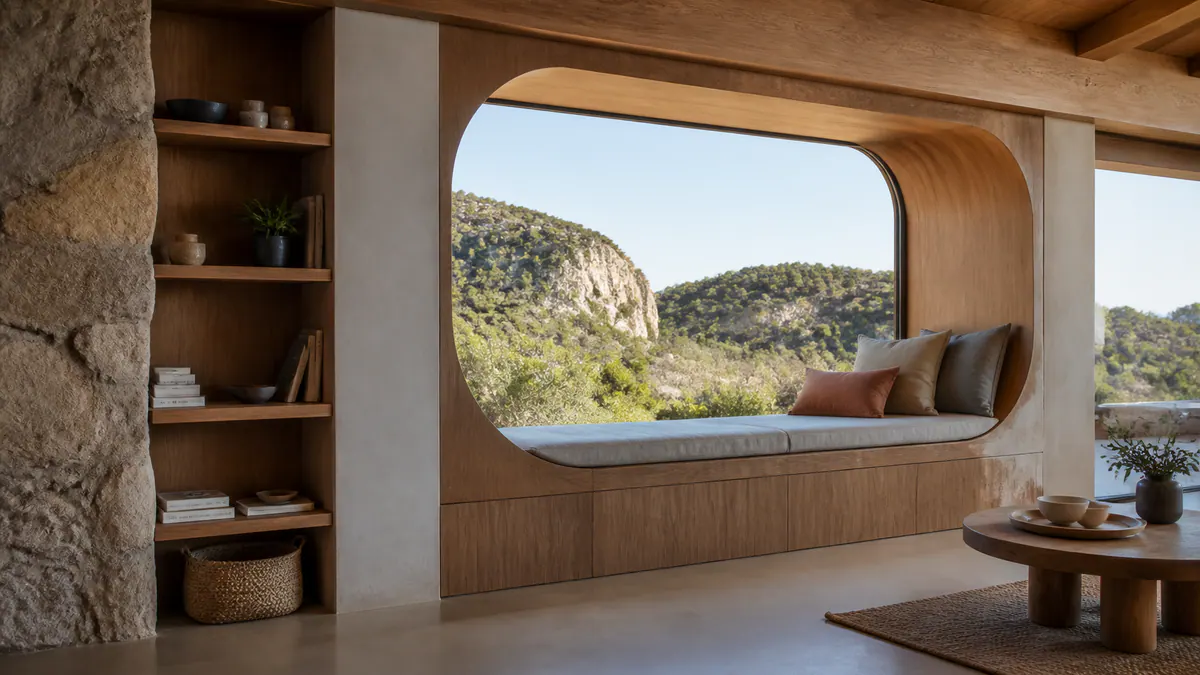
No. They are visibly labelled illustrations. Real, eligible properties are shown separately in bookable Stay cards.
Sources and further reading
Reviewed 2026-08-26. Sources support general category guidance; verify current property details, local conditions and booking terms directly.
- Airbnb’s 2026 most-wishlisted stays research Focaldata survey of 2,000 US adults plus Airbnb wishlist data; January 2026
- Booking.com’s 2026 travel predictions Survey of 29,733 travelers across 33 countries and territories; July–August 2025
- Expedia and Phocuswright short-term-rental guest research More than 900 US short-term-rental travelers, 480 hosts and 13 interviews; 2025
- Expedia’s traveler-review research Expedia Group consumer research about vacation-rental reviews; Reviewed August 2026